
Congratulations! Your site, kafkaestblog, passed 50,000 all-time views.
10/24/2025
Congratulations! Your site, kafkaestblog, passed 50,000 all-time views.
10/24/2025
Franz Kafka died on 03/06/1924. He was a young man – a month short of his 41st birthday. However, his death was preordained years earlier. In my novel, “Kafka In The Castle“, I fill in the missing days of his diary. These are the entries I imagine concerning the days he actually found out his fate.
*******************
04 September 1917
A death sentence.
05 September 1917
Max is saying all the right things. All the nice things. And he is saying them all in the right way. An earnest, matter-of-fact truthfulness which sounds plausible. If he does not tread from a very narrow path. Sometimes I find myself a part of his hopeful speculations. And sometimes I find that I am trying to keep his spirits up. If he is going to all this trouble, then shouldn’t I do my part? But: it isn’t his blood. And anyway – he was the one who insisted on the specialist. Chose the renowned Dr. Pick. And heard – almost as soon as myself – the verdict. Tuberculosis. Tuberculosis engaged in both lungs. Like a preparation for marriage. The engaged man now flirting with another lover. And planning a marriage which will be far more permanent that any I could have had with Felice.

+ 1 day:
Happy Anniversary with WordPress.com!
You registered on WordPress.com 10 years ago.
Thanks for flying with us. Keep up the good blogging.
Franz Kafka (although a trained lawyer) had plans other than his job at The Workers’ Accident Insurance Institute for the Kingdom of Bohemia in Prague. He eventually found it was a good place to be.
Kafka was press-ganged to be a ‘silent partner’ and part-time manager for his brother-in-law’s asbestos factory, Prager Asbestwerke Hermann & Co. In his diary of 28 December 1911, he complains of ‘the torment that the factory causes me’. He also commented to his friend, Max Brod, that “. . . after writing well Sunday night [. . .] I had to stop for the following reason: my brother-in-law, the manufacturer, this morning left for a business trip.”
Needless to say, Kafka’s enthusiasm was not pure. The Factory did not survive.
Also, Kafka had the idea of moving to Berlin and opening a Café. He was to be owner, chef, and waiter. This idea sustained him a number of years, but happily (for everyone) it never came to fruition.
But, as this following story from The Goethe Institute reveals, Kafka has some plans to actually make money from his talent as a writer.
Making money as an author :
“Together with his mate Max Brod, Kafka wanted to publish a commercial bestseller series. Kafka wrote: “We had the idea of creating a new type of travel guide. It was to be called BILLIG or ON THE CHEAP. For example, On the Cheap through Switzerland, On the Cheap in Paris and so on.” It would only ever recommend one thing – the cheapest hotel, the cheapest restaurant, the cheapest means of transport. Linked to this was the idea of the On the Cheap language guide, which, given the impossibility of learning a foreign language completely, teaches the wrong thing straight away. In the end, the idea remained just a dream. Talks with publishers failed, and so Kafka did not become a millionaire. https://www.goethe.de/ins/pk/en/kul/mgz/ros/25439440.html “
DE
It was not my intent to piss off Margaret Atwood.
The opposite, in fact. I wanted her to know she was an inspiration.
She was giving a reading at the University of New Brunswick in my student days. I attended, but there was quite the gathering and she was whisked away at the end. However, I overheard there was a ‘gathering’ in her honour. Invitation only, of course. Academia and literati.
I crashed the party (that was the term used by the professor who clapped his sturdy hand upon my shoulder but – happily – did not thrust me into the night).
But Ms. Atwood was kept deep in many a learned conversation and I had no opportunity to converse. I did, however, overhear where she would be spending next afternoon – the historic University Observatory.
Next day I knocked upon the Observatory door.
It was not a cheerful Margaret Atwood who answered, and answered with alacrity.
She asked my name.
She asked my business.
And she asked how the hell I knew where she was. She had stolen the day to do some writing. Some ‘real’ writing, in this window-of-opportunity grudgingly offered on the book tour.
At least I was there to praise Atwood and not to bury her with some essay question.
Nor had I a manuscript to hand to her.
I might not have garnered a smile, but her curt thank you was reward enough.
For me, at least.
DE
In Kafka In The Castle, I fill in the ‘missing’ diary entries from Kafka’s real diary. He either did not fill in these days himself, or he destroyed them. There are some estimates that Kafka destroyed 70% – 80% of everything he wrote.
~~~~~~~~~~~~~~~~~~~~~~
31 August 1917
The last night of the month. My last night in this tiny house. My last trek along the Alchemist’s Lane as someone who belongs. And soon, my last walk down the Castle steps. Which Max so dutifully counted. And after Max conveys me to the specialist, I imagine I’ll embark on the last part of my life. The power of the Alchemist’s Lane is far from spent, if one truly sees what I have turned into. There could have been no substance so base as myself to put beneath the test of smoking acid. Burning with precision into my lungs.
Since Max helped last night, there is not much for me to carry away. I might indeed be taking as little as I brought that first day. Technically, I must leave by mid-night, and I plan to walk out the door at that precise minute, turning the key in the lock at the last strokes of the cathedral bell. Of course, I don’t have to do this – no one will appear to check on me. But, I enjoy technicalities. I skirt through life on both the vaguest, and the most precise, of technicalities. After all, I am a well-trained lawyer. Like a weasel well-versed in the ways of the earth.
But sadly, this burrow must be vacated. And by its exposed front entrance, for I never had the luxury of a back escape route. But then – is that what is now being offered me? Opened for me? Not the Alchemist’s Lane, which will lead me to the city. Between the walls, through the courtyards, down the steps, and beyond the many gates. But the Tuberculous Lane, which may meander in many directions, stop at many doors, but finally – eventually – lead to the deep decent into a darkened pit. The only thing of me remaining above to be my name, carved in stone. The Herr Doktor. Not an unexpected fate. But not a fate I wish to happen too soon.
Not, at any rate, as soon as my fate to walk out that door, my few parcels and papers in hand. A lingering look upon the table, the lamp, the stove. I think I will say good bye. I think I may even say thank-you. And then, I will take a great deal of time to find my key. It will be in the last pocket I search. And I’ll close the door slowly. With care. And the key in the lock will make a noise I shall never forget.
DE
Squalls and snow and high seas and chill and blow,
And the whistling whistling wind.
Screaming wind!
Lead to Christmas Day.
I feared that Sister Darling of
The Rarefied Church of the World (reformed)
Would not make the tide,
Let alone make a visit
Of Salvation,
To Partridge Island.
To bring Festive celebration to
The Lighthouse Keeper and
Paw, his cat/kitten
Black as the storm-churned sea
With one white mitten.
But,
Heaven be praised,
And joyous greetings to the King of the World,
Jesus Himself!
Sister Darling managed to wrangle a ride,
And bring festive gifts
For man and cat.
(And a rum-soaked cake)!!
And the night can whistle around us
In my snug Keeper’s House.
I hope Jesus was as warm
As we will be.
I’m The Lighthouse Poet Laureate of Partridge Island /1821 – 2022 / A lot of stuff have I seen / A lot of stuff to report}
DE BA. UEL
I am about two thirds through editing my ‘five-years-to-write’ novel. It is called “There Was A Time, Oh Pilgrim, When The Stones Were Not So Smooth. I doubt I will get to keep my title.
I follow my characters, so I had no detailed plot. Thus, I can forget some of the details of something written two years ago.
Though editing brings most of it back.
And I might have known it at the time, but I am surprised that this particular chapter is a juncture to three major threads in the novel.
,
First, there are a number of different levels of the supernatural in the novel. They are distinct, and do not blend. In this chapter, three of these levels make an appearance.
Second, a major event from my main character’s childhood is revealed, explaining much of how she got to be the person she is.
And third, a decidedly unpleasant and mean character actually performs a positive deed.
That’s a lot of work for one chapter. I realized I had to make each of these threads stand out on their own. I remembered that I had worked and worked on it at the time, but not as successfully as I desired.
But this time.
My solution is to use number of three line paragraphs. Everything stands out. Nothing is cluttered
No confusion at all.
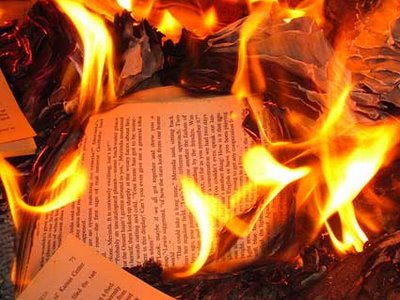
My novel. Kafka In The Castle, fills in Kafka’s missing diary entries. This is how I imagine Kafka’s best friend, Max Brod, reacts to one of the many times Kafka burned his own manuscripts.
~~~~~~~~~~~~~~
19 April 1917
Max was horrified when I told him about last night.
“You burned your stories? Are you crazy?”
“I wrote them, so I must be.”
He smiled at that. Max’s anger can be easily deflected, for it is never deep. Max is a very good man, and cares for me more than I do myself.
“And the novel? The Amerika novel?”
I told him that many chapters of that must have been burned. Probably right from the start – they were no doubt the first things I grabbed from the chair. “Anything else?”
“There were a couple of plays. I remember pages of dialogue.”
Max’s voice became hollow. He might no longer be angry, but neither was he happy. “I didn’t know you had written any plays. You have secrets even from me.”
“I keep secrets from myself. Don’t be offended.”
“What else?”
I could picture him writing down an inventory.
“Some diary entries – those were deliberate.”
“And was that the end of your pyromaniac obsession?”
“Of my own work – yes.”
He looked at me questioningly – he didn’t need another secret.
“There were a couple of bundles of letters from Felice. Neatly tied with string. They burned slowly. I have not had such warmth from her for a long time.”
[image] https://quelibroleer.files.wordpress.com/2011/05/libo-quemandose1.jpg

 kafkaestblog
