Search

kafkaestblog

It is a whirlwind in here

Category

novel

Writer Zombie Meme Takes A New Twist

40cf4e788d01c8cc4ef12bcc6f3abf4d

I’m not sure why people approach me on the street with the conviction I’m a writer. This has happened a number of times, out – as they say – of the blue. When I ask why they think so, they become defensive. I have learned just to say ‘yes’ and let the conversation meander from there.

Of course, when I give readings or lectures or talks, it is to be expected that I’m a writer. That’s why I’m there. Even if I don’t wear a name tag (which I dislike with passion). I believe I’ve learned not to read too long (regardless of the great material), but I can chat and answer questions about writing until the cows come home to roost. Clichés with a twist a speciality.

In addition to being narrowed-in on as a writer, I have been mistaken for dead authors. In this situation I do believe I must make some comment. For the sake of the dead as well as myself. Although I believe I can still make a good impression as a person who is alive, even here I have run into trouble. A taxi driver did not want to believe that the writer he mistook me for was dead.

“I never heard that,” said he.

“It’s true.”

“Are you sure?”

“He’s been dead for years.”

“You look just like him.”

“Not in his present state,” said I.

The taxi driver did not find me humorous.

A few days ago, however, a new wrinkle was added to my apparent Zombie life.

I was sitting on a park bench,waiting for a bus and watching the bustle of the city pass by. A man of middle years, puffing on a Vapour, settled on a bench across from me. After a few additional puffs, he stated – not asked –

“You’re a writer.”

“Because I’m using a pen?” (which I was, though I was fiddling with sums)

“Who did you write for?”
“Write for?”
“Between 1959 and 1966.”
“What do you mean, ‘who’?”
“Where would I have seen you?”
“Do you know who I am?”
“You know what I mean.”
“I wrote for some newspapers back then.”
“No – not that.”
“But that’s what I did.”
“When you worked for Hemingway.”
“Earnest Hemingway?”
“I’ve read his books?”
“Oh.”
“You edited his books.”
“I did?”
“You were his editor.”
“I would have been too young to be able to do that.”
“What book did you like?”
“Of Hemingway?”
“You know – which one?’
“I’d guess The Old Man And The Sea.”
“People say that. They’re wrong!”
“They are?”
“It’s a terrible book.”
 
To prove there is a God, my bus arrived.
DE

One Hundred Years Ago: Kafka & Summer & Freedom

original

Excerpt from my novel, Kafka In The Castle:

~~~~~~~~~~~~~~~~~~~~~~~~~~~~~~~~~

September 1917

Even though I wait for  the summer to be over, I am always surprised by the abrupt transition.

One Wednesday it can be uncomfortable to walk the streets in the afternoon, but by the weekend it seems I should put the windows down at night.

Now, I have these other desired passages thrust suddenly upon me, but for all my longing I am woefully unprepared.

I am back in my parent’s apartment, but it is only for another week. Then, I am going to Zürau to be with Ottla.

I have been granted three months leave from the Institute.
The Director is most concerned about my state, and speaks of my invaluable contributions. He seems to mean it. Would not hear talk of my resignation.

So, I get to follow Ottla out of Prague – almost with carte blanche.

And there is nothing more to be done with Felice. I may have written her my last letter. What good is a tubercular for a husband?

But – to be with Ottla. To be out of Prague.  To get away from Prague!

DE

(image)data.whicdn.com/images/168943871/original.jpg

Diana As The Dead Princess

diana-elvis-638167

In my novel, More Famous Than The Queen, my famous character – known only by his initials, ST – is invited to attend the funeral of Diana, Princess of Wales. This is from his arrival at Heathrow Airport.

~~~~~~~~~~~~~~~~~~~~~~~~~~~~~~~~~~~~~~~

“Did you ever meet Dodi?”

“Should it be a State funeral?”

“They say she telephoned you. Any comment?”

“Were the Princess and Dodi getting married?

“BBC International. Any possibility of an interview?”

“How long will you be in London?”

“Do you think the Queen has treated her shabby?”

“Do you think the photogs killed her?”

“They say the Royals welcome her back into their world only as a corpse. Do you agree?”

“Welcome to my world.” ST sighs the words, but not loudly enough to be picked up by the forest of microphones.

Less than a day ago, his world consisted of the back yard of his Nova Scotia hideaway, and a running debate with himself about the merits of hour-old coffee. Wife Number Two (he realizes this term is a bit cruel, for her name is Miriam, and they parted amiably enough) swore coffee should be thrown away if it became an hour old. ST can’t notice a difference, and wonders if it is a deficiency in him.

This was the height of his concern when his email, and his fax, dropped the invitation/summons into his lap. He had reacted as if the questionable hot coffee was dumped on him instead.

His stirred-up memories of Diana are also bittersweet.

Particularly his recollections of her troubled phone calls. At first she would be full of apology for disturbing him, but this quickly gave way to a jumble of questions and gossip. She seemed to be forever asking advice, yet she had her decisions already made. Which never irritated him, and obviously never bothered her, for within a few months she would be on the phone again, and the cycle would commence.

ST wishes he could have had the chance to give her one last piece of advice.

And that she would have taken it.

Stay in the hotel for the night.

DE  

(image)cdn.images.express.co.uk/img/dynamic/106/590x/secondary/diana-elvis-638167.jpg

Taking A Vacation – But Not So Much

In a discussion about vacations today, I made the comment that I don’t consider I have had a vacation for forty years.  I doubt I was believed and, I’ll accept, it probably isn’t even true. But, when is a writer ever off? Ideas appear at will (not my will) and characters demand that attention must be paid. This can happen any day, and usually every day. This ain’t no complaint, as writer’s block is far worse.

Still, I think I’ll slip some blogs in that I have already done before. There may be no rhyme nor reason for my choices, but, this one came to mind because I think a character somewhat like The Gypsy Lady might have just appeared in my current manuscript. A totally different story and situation, but …

~~~~~~~~~~~~~~~~~~~~~~~~~~~~~~~~~~~~

gypsyviolin-graphicsfairy11

08 June 1917

A Gypsy confronted me today, and I was in the mood for a bit of sport. Her age was difficult to tell – certainly a decade older than me. In her swirl of shawls and dangling jewellery, heavy make-up on her face, she could almost have been in disguise. She peered at me with an intense sigh, attempting – I am sure – to penetrate my own disguise.

“You are a Jew,” she said.

“And you a Gypsy,” I replied.

She seemed pleased with my response, for her professional smile became real.

“You state the obvious,” she said. “As becomes a Doktor of Laws,”

I replied. “But to your eyes, do you not state the obvious?”

“Are you going to banter with a poor old Gypsy woman, instead of barter? That would make you suspiciously like one of us.” She said this with a growl in her throat.

“The Gypsy and the Jew,” I said, feeling the challenge which I so miss. “Perhaps an opera – but I think it’s been done to death.”

“They will try to do us all unto death,” she said harshly, and turned away.

I had the fear she was going to leave me without another word, but what she did was to spit fulsomely onto the street.

“They can’t kill us all,” I said, but I knew she heard the doubt in my voice.

She slowly faced me again.

“So. Even a Doktor of Laws can have hope. That is refreshing – but foolish.” She took my hand and felt my palm roughly with her thumb, although all the while her eyes never left my face. “You are going to travel.”

“Travel is a vague word. One can go on many types of voyage.”

“And reach many destinations,” she added, still holding my hand. “If you take away my vagueness, you take away my trade.”

“Then let me pay you for your services right now.”

This transaction would make her loose my hand, which is what I wanted most of all. She had frightened me, for her eyes and face were full of truth. I know the truth. I know it when it presents itself, stark and unobscured. I search out truth endlessly, yet still can flee at its approach. As in her eyes. But she gripped me more fiercely, and pulled my hand up.

“The coin, Herr Doktor.” Her voice was now soft. “The coin can wait.”

She at last lowered her eyes and looked closely at my palm. She rubbed the lines and whorls of my skin. She touched her finger to her lips, and spread the moisture along my hand.

“Your lifeline, Herr Doktor,” she took a quick look in my eyes, “of Laws. You deceive with the youth upon your face. Is that not so?”

“If your eyes stop at the mask, then no, the years have not etched themselves deeply.”

“Not on your face, Herr Doktor of Laws.” Her grip was intense. “But on your palm…” She hissed. “You will soon embark upon that final voyage.”

She released my hand, rubbed her fingers across her sleeve.

“But you will not go in haste. There will be many stops along the way.”

Suddenly her face was full of the most beautiful smile, and her laughter was genuine.

“I see you do not complain of vagueness now.” She held out her hand. “The coin, Herr Doktor of Laws. This time I have truly earned it.”

I dug deeply into my pocket, and feared that I may have overpaid her. But, perhaps, that is not possible.

DE

(image)thegraphicsfairy.com/wp-content/uploads/2012/10/GypsyViolin-GraphicsFairy1.jpg
The Good Ship “Pegasus”, In Story And For Real


176447_1443024569_2007

In my historical novel, China Lily, set in the 13th Century, I have spent a good deal of time writing about (and thus aboard) the good ship Pegasus. It has been on a trading voyage from Europe to China for nearly three years. I have become quite acquainted with it.

Currently, a manuscript  about the same European trading family, though set a thousand years earlier, is at the historical (though they do other genres) is being considered by the publisher, Pegasus, in New York.

And, this morning, the good ship, The Atlantic Pegasus, is in port.

Let these winged portents coalesce.

Following is a brief portion of China Lily.

~~~~~~~~~~~~~~~~~~~~~~~~~~~~~~~~

Excerpt from China Lily

Cepa is tending to the onions, even as the waves make Pegasus shudder from bow to stern. He knows many members of the crew begrudge his use of fresh water. He has heard the comments about him using buckets of deck wash for the purpose. A couple of the more unimaginative seamen have suggested that salt water will add to their taste. Cepa has so far refrained from asking how they would feel with no onions at all.

Pegasus makes a huge yaw to starboard. Cepa grabs for the support of his hammock hook. He holds on with his left hand as he watches the braces securing the onion boxes. Of the many things that make the crew question his sanity, perhaps the most talked-about is that he has given up the privilege of having one of the few bunks as a place for the onions. Space is so scarce on the Pegasus that he removed the wooden bunk and put in tiers of shelving of the onion setts. He even devised some crude trickle-down tubing so he only waters the top tier. So far he can claim that not one dipper of water has been wasted.

When Cepa had explained to the captain of the ship what he wanted to do, the man had not scoffed as did many of the crew. He had seen the effects of scurvy on many  voyages, and understood that this type of fresh produce did something to control it. In fact, he was very pleased Cepa was willing to sacrifice his bunk space for the purpose.This was not the typical action of the merchants he was paid to transport from Italy to China and back. It usually took half the out-voyage to get these self-important wealthy people to realize that their opinions and needs were of no importance in the world of the ship.

Some sat back and made threats of what retribution would occur when they finally reached port. They always changed their minds after experiencing the first storm at sea. Most soon realized the new world of the ship, and did what they could to fit in.

DE

(image)https://balticshipping.com/uploads/ships/d/a/a/a/7/e/e/c/4/3/1/f/d/5/f/7/3/4/a/8/1/c/5/c/9/a/a/d/f/7/d/2/176447_1443024569_2007.jpg

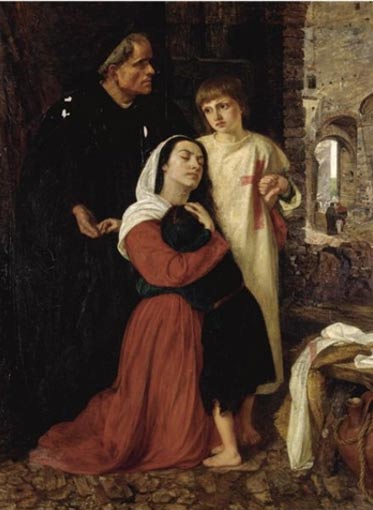
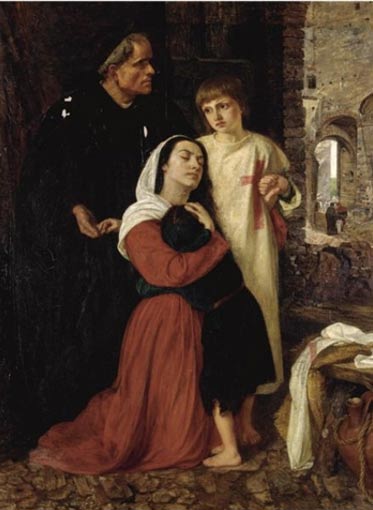
Mother And Son In Thirteenth Century Europe

episode-of-the-child-crusade

Exercpt from: China Lily

Matzerath’s mother rarely shared her thoughts with anyone. She is as elusive now as when he was a small boy being raised within the shadow of the religious buildings where she still works as a cook. Bishops and abbots come and go, and red-robed Princes of the Church make their visits, for which she must dress appropriately – but she remains. At least Matzerath assumes she is still there, though he has not been back for five years.

Matzerath is small in stature and taken to be younger than he is. At thirteen he is treated as seven. He allows this because he finds there are more advantages then penalties. He knows far more than is expected of him, and avoids many pitfalls through the guile no one expects he has. He also achieves more than is expected from him, and is given much leeway for a child. Had his real age been obvious, he would be perceived as dim-witted. Because he is thought of as a child, he is considered gifted.

Matzerath’s mother is aware of how her son is tolerated – she even encourages his guile. He is treated better than most children, whose father is absent months at a time sailing the North Sea.

Matzerath is also getting an education of sorts, which is generally restricted to the children of nobles and the wealthy. He has learned how to read and write, along with the rudiments of mathematics and geography. He also pokes his nose into the stables, and the smithy, and the carpenters, picking up their basic skills.

He follows his own mother with interest, and can chose, prepare and present many of the dishes she serves at the Monastery. For the notables at the cathedral, and other clergy, she is expected to produce more sophisticated fare. Matzerath has even acquired some of these skills, but a puny child is forbidden to appear near the high table. He does get to nibble the leavings but notes – as he also does at the Monastery – that very little is ever left.

Matzerath would have been content to stay in this arduous life seasoned with episodes of interest and learning, but his elusive nature is discovered by a visiting bishop.

The Bishop is a militant with evangelical frenzy. He is intent upon forming a Children’s Crusade to march to the Holy Land. Matzerath is not sure what this means, though he gathers it will offer an opportunity to leave the confines of the town and local villages where he has spent his life. His mother is better informed.

Even though the last Children’s Crusade happened generations ago, and the Church proclaims it was a wondrous act for the Glory of God, she is fully aware that most of the children never came back. And that the Holy Land is still lost to the grip of heathens. The murmurs from the Monastery and the high table reveal this bishop to be a renegade and unsound in judgment. His ‘new’ crusade is predicted to be a disaster. His abilities to lead it are a joke. However, he does have the ear of the Pope, and his family has much wealth to give to the Church.

Matzerath does not possess an abundant affection for his mother – not for anyone – but he realizes that regardless of the amount of work she extracts from him, she generally does what is best for him. He pays attention to her instructions and her observations and her warnings. She also encourages him to tell her what he sees and hears. As he becomes older, she also wants to know what he thinks about the things he sees. Matzerath realizes she is using him as a spy, but he does not mind. He knows his mother sometimes manipulates the information he brings for her own well-being, but these rewards also come to him.

Matzerath heeds the warnings his mother gives about some of the priests and monks and their interest in boys. He discovers this himself upon a couple of occasions, and even satisfies one priest just to see what it is like. He shares this with his mother because he knows she sometimes does the same.

DE

(image)http://www.ancient-origins.net/sites/default/files/Episode-of-the-Child-Crusade.jpg

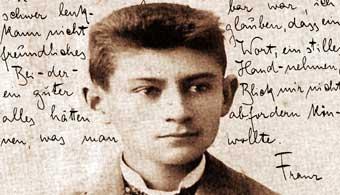
Kafka Uses The Internet To Prod Me Back To Work

livros-franz-kafka-espanhol-download-gratis-noticias

[Franz Kafka]

This is saying a lot for Kafka who, in truth, was not even much of a fan of the typewriter. But, he was a constant writer (even if he destroyed – it is estimated – 75% of what he wrote) and certainly expected any other author to be the same.

At any rate, coupled with a bit of travel, I had not written for ten days. It is possible that I have not gone that long a stretch for years. For the last couple of years I had been writing six days a week, rarely missing that amount. I think that in the last few months, writing an original novel and editing another on a daily basis did me in.

But, earlier this week, on the same day, I received the same article in an email and on Facebook. It was a short section of Kafka Diary entries. Real ones (I say this because I have written a novel where I fill in some *missing* Kafka diary entries). It was directed to writers, and commented about some aspects of writing. The one that leapt out at me was:

March 11  How time flies; another ten days and I have achieved nothing.It doesn’t come off. A page now and then is successful, but I can’t keep it up, the next day I’m powerless.

I generally think I can take a hint. And a hint given twice. And a hint from Kafka. And a hint given decades after he is dead, via a medium (pun intended) that Kafka would despise.

So – I took the hint.

A page a day since then.

And onward —>>>

DE


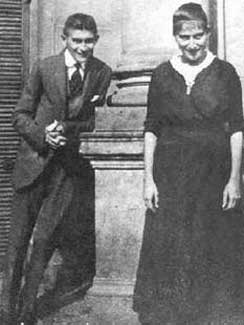
A Woman Takes Control ~ From “Kafka In The Castle”

frank-with-ottla-his-favourite-sister

Franz and his sister, Ottla

16 December 1917

I think it possible the women conspire unbeknownst to themselves.

It was Ottla’s suggestion that I walk Fraulein G home after dinner. She stayed well into the evening. She was good company and we all enjoyed ourselves. We even read to each other – I selected some work by Max. He will get double pleasure from that, as he likes to entertain the young ladies himself.

She helped Ottla with the dishes, and some other clearing chores. Ottla then produced a bottle of schnapps – something I didn’t even know was in the house. I thought it possible Fraulein G had brought it (I’ve found she is capable of such a forward gesture) but I also noted it was the type which father prefers, so perhaps Ottla brought it from Prague. (And perhaps father will be recounting his stock with some confusion.)

Ottla encouraged the consumption of a couple of small glasses. I will not tell Max that the appreciation of his writings was enhanced accordingly.

As I walked Fraulein G home, I could not shake the feeling that something was expected of me. Something more than my company along the darkened road.

Was I to take her arm, or her hand, or even put my arm about her waist? I felt an element of encouragement for some such action, yet wondered where such a thing might lead.

Further, perhaps, than just the door of her house.

But, as the wind was lively, I chose to take her hand, and she then chose to walk closely by my side.

And the lips which murmured “Thank you” at her gate, and chose to brush my own, no longer called me “Herr Doktor”.

DE

(image)http://www.thecultureconcept.com/wp-content/uploads/2011/10/Frank-with-Ottla-his-favourite-sister.jpg

When Writing Spooks Television

81-e23a9f4fb2887
I am currently writing a *perhaps* novel (that is, perhaps it will be a novel), though I suppose  I should find out if it is a novel since I just passed the 200 page point.

In my current project, following the escapades of Alison Alexandra (entitled Stones for short), my erstwhile activist, Alison Alexandra, is a passenger on a freighter (that takes a limited number of passengers) as it delivers goods from port to port.

I’ve done a fair amount of online research into these freighter cruises as I, myself, would much prefer such a trip over the very crowded (and expensive) Cruise Lines.  But, I will research anywhere that might help my cause. So, a couple of nights ago, on television, there was a documentary about the most recent, largest, and most extravagant Cruise Ship as yet built.

I was very interested in following its construction. I was also very interested in seeing how it was run, taking into consideration the thousands of people who had to be tended to. The delivery of provisions, the kitchens, and the massive amount of work necessary to clear out thousands of folk and then greet thousands of folk on the same day, was fascinating. Not a freighter by any standard, but basic principles were the same.

Then the documentary followed the ship on its first cruise.

Now, back to my reality. At the same time as writing original material about Alison Alexandra, I have been putting a hand-written manuscript of a novel finished a number of years ago into the computer. I do one thing in the morning, and the other in the evening. So far – no problems have arisen.

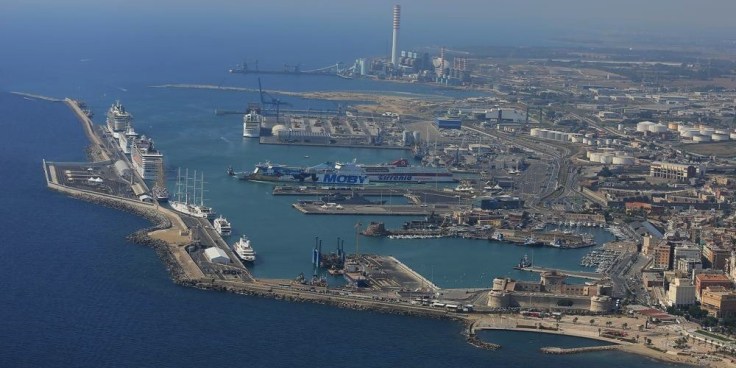
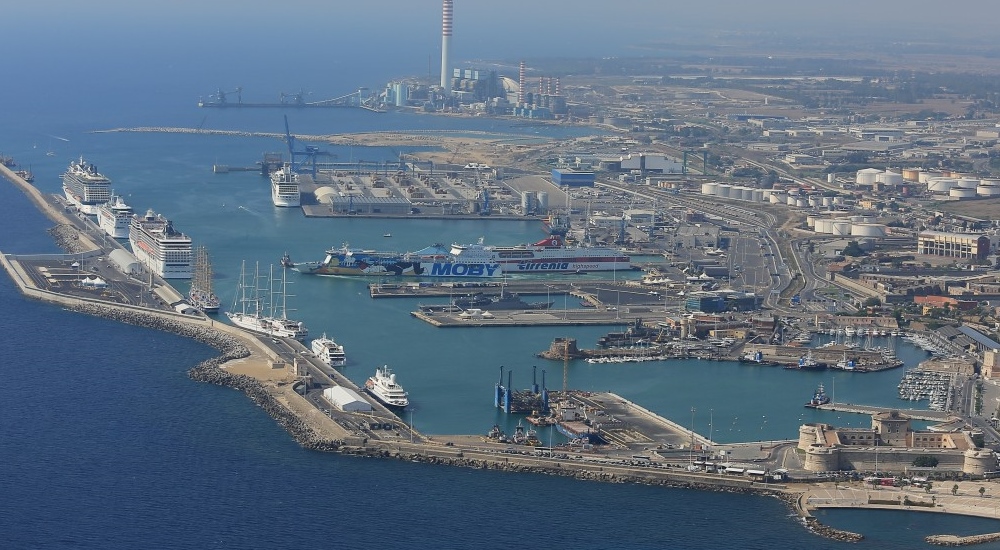
My hand-written manuscript is set in the 1300’s. The first part depicts a two year voyage from Italy to China and back. Both the voyage and events in China are described. And then, the arrival back to Italy. For four straight days, I have been transcribing the docking and aftermath of the ship at Civitavecchia, Italy. It is the closest seaport to Rome.

On television, before my eyes, after a day of writing, the Cruise Ship I had watched from inception to voyage, pulled into the port of Civitavecchia.

Maybe I should take a cruise.
 

DE

Civitavecchia (image)http://www.cruisemapper.com/images/ports/81-e23a9f4fb2887.jpg

Blog at WordPress.com.

Up ↑