Search

kafkaestblog

It is a whirlwind in here

Category

novel

After Margaret Atwood’s Memorable Memoir, Can I Be Far Behind?

I have shared this tale before, and feel encouraged to do so again. It is an odd milestone in my own writing odyssey, and when Margaret Atwood achieves a profound feat, as her new memoir reveals, I do take note. I have about forty pages of my own memoir done, and years to go before I sleep.

*******************************

It was not my intent to piss off Margaret Atwood.

The opposite, in fact. I wanted her to know she was an inspiration.

She was giving a reading at the University of New Brunswick in my student days. I attended, but there was quite the gathering and she was whisked away at the end. However, I overheard there was a ‘gathering’ in her honour. Invitation only, of course. Academia and literati.

I crashed the party (that was the term used by the professor who clapped his sturdy hand upon my shoulder but – happily – did not thrust me into the night).

But Ms. Atwood was kept deep in many a learned conversation and I had no opportunity to converse. I did, however, overhear where she would be spending next afternoon – the historic University Observatory.

Next day I knocked upon the Observatory door.

It was not a cheerful Margaret Atwood who answered, and answered with alacrity.

She asked my name.

She asked my business.

And she asked how the hell I knew where she was. She had stolen the day to do some writing. Some ‘real’ writing, in this window-of-opportunity grudgingly offered on the book tour.

At least I was there to praise Atwood and not to bury her with some essay question.

Nor had I a manuscript to hand to her.

I might not have garnered a smile, but her curt thank you was reward enough.

For me, at least.

DE

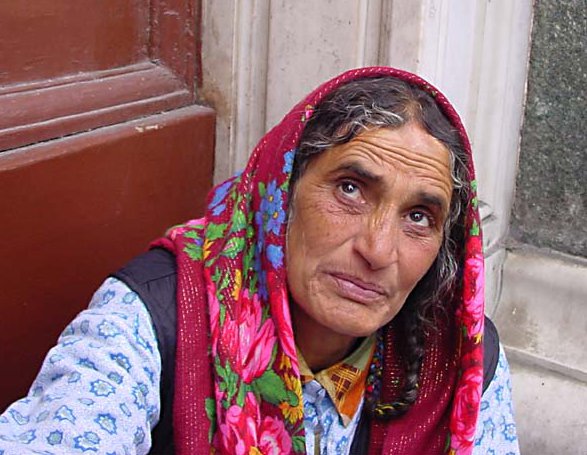
For Kafka On His Death Day: A Gypsy Speaks The Future Of Truth And Death [from: “Kafka In The Castle”]

gypsywoman

08 June 1917

A Gypsy confronted me today, and I was in the mood for a bit of sport. Her age was difficult to tell – certainly a decade older than me. In her swirl of shawls and dangling jewellery, heavy make-up on her face, she could almost have been in disguise. She peered at me with an intense sigh, attempting – I am sure – to penetrate my own disguise.

“You are a Jew,” she said.

“And you a Gypsy,” I replied.

She seemed pleased with my response, for her professional smile became real.

“You state the obvious,” she said. “As becomes a Doktor of Laws,”

I replied. “But to your eyes, do you not state the obvious?”

“Are you going to banter with a poor old Gypsy woman, instead of barter? That would make you suspiciously like one of us.” She said this with a growl in her throat.

“The Gypsy and the Jew,” I said, feeling the challenge which I so miss. “Perhaps an opera – but I think it’s been done to death.”

“They will try to do us all unto death,” she said harshly, and turned away.

I had the fear she was going to leave me without another word, but what she did was to spit fulsomely onto the street.

“They can’t kill us all,” I said, but I knew she heard the doubt in my voice.

She slowly faced me again.

“So. Even a Doktor of Laws can have hope. That is refreshing – but foolish.” She took my hand and felt my palm roughly with her thumb, although all the while her eyes never left my face. “You are going to travel.”

“Travel is a vague word. One can go on many types of voyage.”

“And reach many destinations,” she added, still holding my hand. “If you take away my vagueness, you take away my trade.”

“Then let me pay you for your services right now.”

This transaction would make her loose my hand, which is what I wanted most of all. She had frightened me, for her eyes and face were full of truth. I know the truth. I know it when it presents itself, stark and unobscured. I search out truth endlessly, yet still can flee at its approach. As in her eyes. But she gripped me more fiercely, and pulled my hand up.

“The coin, Herr Doktor.” Her voice was now soft. “The coin can wait.”

She at last lowered her eyes and looked closely at my palm. She rubbed the lines and whorls of my skin. She touched her finger to her lips, and spread the moisture along my hand.

“Your lifeline, Herr Doktor,” she took a quick look in my eyes, “of Laws. You deceive with the youth upon your face. Is that not so?”

“If your eyes stop at the mask, then no, the years have not etched themselves deeply.”

“Not on your face, Herr Doktor of Laws.” Her grip was intense. “But on your palm…” She hissed. “You will soon embark upon that final voyage.”

She released my hand, rubbed her fingers across her sleeve.

“But you will not go in haste. There will be many stops along the way.”

Suddenly her face was full of the most beautiful smile, and her laughter was genuine.

“I see you do not complain of vagueness now.” She held out her hand. “The coin, Herr Doktor of Laws. This time I have truly earned it.”

I dug deeply into my pocket, and feared that I may have overpaid her. But, perhaps, that is not possible.

DE

(image) http://1.bp.blogspot.com/-SDayP1IJD0M/TVrspG3I5oI/AAAAAAAAGko/RjODxg1C_WI/s1600/gypsyWoman.jpg

What Goes Around Does NOT Necessarily Come Around On Friday 13th

106933578_o

In my novel, Kafka In The Castle, I fill in the missing entries of his actual diaries.  There are many days to fill, as he either did not write during these days, or he destroyed the record.

Kafka did have occasion to ponder Friday 13th. The date was connected to “The Swiss Girl”, whom he met at a resort.  She was eighteen and he was thirty-four. It is unclear how intimate their relationship became.

Twice, I give him a brief recognition of Friday 13th. In reality, The Swiss Girl haunted him (pleasantly) all his life.

**************************************

13 April 1917

I almost wrote down the year as 1913. That was the year I met the Swiss girl. And I remember her joking about, and how we had missed it by just a day. She was superstitious – Christians seem to be. I wonder what precautions she is taking today. It will be three years and seven months since I saw her. Yet some of the things we did could have happened last week. I think that memory must be made of rubber.  You can sometimes pull it toward yourself – and sometimes it snaps away like a shot. Causing as much pain.

13 July 1917

Friday the 13th again. What better time to think of the Swiss girl, than with F. I don’t know if such memories help sustain me, or if they revel how intolerable the future can sometimes be. I can not imagine the Swiss girl’s face across the table from me, nor her voice singing one of her quiet songs. If I must be trapped, then why can’t I be trapped in the past?

[The Swiss Girl ~ Gerti Wasner] p8.storage.canalblog.com/89/52/207513/106933578_o.gif

Franz Kafka Dies June 03, 1924

Franz Kafka died on 03/06/1924. He was a young man – a month short of his 41st birthday. However, his death was preordained years earlier. In my novel, “Kafka In The Castle“, I fill in the missing days of his diary. These are the entries I imagine concerning the days he actually found out his fate.

*******************

04 September 1917

           A death sentence.

05 September 1917                                                                 

Max is saying all the right things. All the nice things. And he is saying them all in the right way. An earnest, matter-of-fact truthfulness which sounds plausible. If he does not tread from a very narrow path. Sometimes I find myself a part of his hopeful speculations. And sometimes I find that I am trying to keep his spirits up. If he is going to all this trouble, then shouldn’t I do my part?  But: it isn’t his blood.    And anyway – he was the one who insisted on the specialist. Chose the renowned Dr. Pick. And heard – almost as soon as myself – the verdict. Tuberculosis. Tuberculosis engaged in both lungs. Like a preparation for marriage. The engaged man now flirting with another lover. And planning a marriage which will be far more permanent that any I could have had with Felice.

History And Europe And Estey : Redux

Looking myself up on the Internet (as one is sometimes wont to do), I came across this. I posted this nearly ten years ago, and have/had totally forgotten it. So, it’s a possibility others have forgotten it also. I find it quite interesting.

History And Europe And Estey

0a Isabella d’Este, Giovanni Cristoforo Romano, 1500.

There is a tradition in “my” branch of the Estey family that we descend from the d’Este of Italy. The d’Este clan were rich and powerful and influential. They married well which – yes –  brought the infamous Lucrezia Borgia into the family when she wed Alfonso I d’Este, Duke of Ferrara.

My father had a reproduction of Alfonso’s sister, Isabella, readily at hand. Isabel was a name for at least one daughter in every generation of Esteys. Lucrezia attempted to befriend Isabella, but to no avail.

The town of Este is in Northern Italy, in the Veneto region, about a two hour car ride from Venice. It’s most recent population figure of two years ago was around 17,000. I have a special fondness for this part of Italy and have sprinkled references to it in some of my novels. Indeed, my whole historical onion trilogy is centred around a town in this area.

So, Este was certainly a destination when I travelled through Europe. And the surrounding area. Este was suitably medieval in tone, with its ruined Este castle and wonderful flower beds and bowers and stone bridge over river and walled town and as happily historic as all get out.

I looked to see how many Estes were in the phone book (a respectable number) but I didn’t phone anyone.  I would be more thorough and stay longer on another trip. I doubt there is any way to fix up that castle.

I enjoyed all of Italy that I visited (and the rest of Europe held no less enthusiasm from me). But to stick, as it were, around the old homestead, the most enjoyable places were Venice and Florence. I was most surprised to see cruise ships looming from the Venetian waterfront.

I sighed on The Bridge of Sighs – from such beauty to such terror those prisoners were lead. A stunning memory was boating on the Grand Canal at dusk and seeing rooms in a passing mansion ablaze with chandeliers.

Florence was my favourite. It is, of course, awash in museums and galleries and art art Art. To chose the one which stunned me most was  Botechelli’s Birth of Venus – and that’s saying a lot, considering. The Ponte Vecchio over the Arno lives up to all its billing. Alas, I bought no gold.

Also, a memory is walking along certain streets and assuming I was near riding stables because of the permeating smell. However, I was in the leather good quarter. There was also the ancient, wire mesh and gated elevator,the type I had only seen in movies, wheezing me aloft to my lodgings. And the lady who left her room key on my table after breakfast. And don’t get me started on the markets and the food. Don’t.

However, there is one golden memory which consists of neither history nor ancient art. This happened in Verona. I was walking along a busy street and looked into the interior of a news vendor. The building also had an array of paperback books. And there, looking back out at me, was my own novel, L’INGANNO BONNER, recently produced in an Italian translation. That was a most pleasant delight indeed.

DE

(image)http://www.isabelladeste.org/_/rsrc/1467897567813/isabella-deste/0a.PNG

Those Pesky Characters In The Novel – Follow Your Characters – Sometimes At A Gallop

My characters are racing me along. 
It’s not that I can’t keep up with them – I don’t keep up with them.

They finished a chapter a few minutes ago that I had assumed would go one for two or three more days (writing time). Nope, they finished tonight, and decided where they would rather be.

Bossy as all get out.
But – invariably – correct.

After All, they know what they’re doing, even if their sluggish author does not.
I’m rarely sure how I am going to get from here to there – but it sure is interesting. And thus, will be interesting to the reader.
DE

Oktoberfest

I begin my novel, Fame’s Victim, during Oktoberfest in München. Here is the abridged first chapter.

ST is famous for his discoveries about Space and Time – hence the initials. He is fodder for magazine and movie fantasy. His is the life from which envy is made.   

Fame is a seductive life sentence. ST suffers consequences as he strides the red carpet.

In Fame’s Victim, ST ends one century attending Oktoberfest in Munich,  the biggest party in Europe, and starts the next hiding away from the world’s Press that hound him for his opinion

~~~~~******~~~~~

UM PA PA! UM PA PA!

Tuba sounds assail ST as he forges through the clogged streets and packed alleys of Munich during these last hours of Oktoberfest. This, and the thousands upon thousands of revellers apparently heading to his own destination.

ST  worries what will happen when he reaches the Kafer’s Wiesnschanke tent. Because it is situated on the very edge of these huge Oktoberfest fairgrounds, ST is in one of his impeccable disguises. However but will it prove so effective (as it is proving now), that he will be unable to gain entry? Without immediate entry and quick access to his reserved table, he is not going to get to his waiting bottle of Glen Grant scotch.

ST has never had to deal with this problem. He uses camouflage to get from one private destination to another, and always has the luxury of removing his disguise in the comfort of some bath or bedroom. Here, he will have to prove who he is in one public place, so he can get out of another public place.

ST passes the Hofbrauhaus, with still a long way to go. He regrets he consented to spend these last two hours of the week deep in the gemutlichkeit of Bavarian sausages, chicken and beer – horse-drawn wagons of which trundle past even as he aims unerringly for Kafer’s Wiesnschanke tent.

This dramatic scene is foreign to him, though he supposes he is no longer foreign. It is through his inheritance of vast tracts of land and chattels along the coast of the North Sea (to say nothing of the interesting pockets of real estate and apartments still being revealed across the face of Europe, America, Australia, and the Bahamas) that his special invitation to this evening arrived. And the obligation to attend.

The acres of vibrant lighting cast a multi-hue glow across ST. He notes his roughly-shaped beard (one of three dozen – each cropped differently), takes on such bizarre colouring that he doesn’t remember what it really looks like. He probably could have gone without disguise and passed unmolested. That is what his hosts had told him, but he has had such assurances before.

Under a set of flashing amber and yellow lights, ST looks at his watch. The crowd is slowing him, and he should have used another entrance, instead of the broad way through the tents. He tries to get closer to the edge of the crowd, but the edge in an ever-moving mass is difficult to find. It is analogous to the boundaries of Space/Time, which he can never actually discern either. ST rarely gets such a chance to put his world-famous theories to a practical test. Head up and elbows to the ready, he begins a vigorous forward thrust. This attitude alone is enough to make more people give way, plus he is not without practiced skill at dodging and pirouetting among crowds.

As ST advances the garish lights become more extreme, and he has difficulty distinguishing the various tents. The one he wants is in the upper corner, and supposedly not easy to miss. But it is also one of the smallest (holding slightly over 2000), and for all he knows it may get lost in this absurdest hurly-burly. He may succumb to this incredible throng, and get carried away on its tide to the more boisterous Spatenbrau, or whisked back to the very beginning of his trek at the Hippodrom.

In an attempt to fit in, when ST first arrived at the fairground he had purchased one of the large gingerbread cookies, which so many people are wearing around their necks. This is now proving a mistake, for it keeps bumping back and forth across his chest. As he has never actually seen anyone eating the damn things, he hesitates to take this course of action. On the other hand he is concerned that if he just tries to remove it from his neck, the cord might get tangled in his fake beard.

ST clamps a hand over the cookie as if he was taking an oath, and continues through the noisy revelry. He is just passing the Winzerer Fahndl tent and thus is not far from his destination. A turn to the right and some more well placed elbows, and he might be able to arrive in another five minutes.

Just as ST can lose Time when he attempts to track it, equation by equation, through the vast quadrants of his computer programs, so it begins to elude him here. The overwhelming chore of Oktoberfest becomes surprisingly addictive. Although he still wants his scotch and reserved place at table, he looks longingly at the Winzerer Fahndl tent with a desire to enter. As he stares overhead at the amusement park rides, he wonders if he would find them as thrilling as the screaming participants indicate they are. ST is even tempted to gravitate to the nearest thundering band, and settle in close to the tubas. Perhaps he might risk an inquisitive munch of his over-large gingerbread cookie.

These thoughts put him in a better frame of mind as he eases himself into the slowly moving crush. He gets behind a trio of husky teen-agers, and lets them unknowingly clear a path.

It seems their goal is to sample beer from each of the fourteen tents, but so far their boisterous gung-ho remains good-natured and useful. ST keeps just the right distance behind the three so he is not considered a part of their group, yet manages to glean the benefit of their passage. Much as the stern of a ship glides through the wake of the prow.

When he comes within sight of his own goal at Kafer’s Wiesnschanke, he wonders if his trio of outriders is going to steer in its direction. An argument can be made that it is next on the list of any pub-crawl, but the youths are loudly debating the merits of either the Sportschutzen or Lowenbrauu.

ST has the temptation to clap them boisterously on their shoulders and invite them to his more rarefied destination. His popularity with youth is particularly high right now, as he appears to be quite the rebel with his contention that the year 2000 is not the Millennium. This is not his desire, but who is more going to be asked all the questions about this momentous event than the expert on Space/Time?

Even his obvious equation – obvious to ST, at least – that if someone owes you $2000, you are not going to be satisfied in only getting $1999 back – has become an embedded catch phrase in nearly every article now written about the Millennium. It has even become a refrain in a contemporary pop song.

ST starts to hum “Don’t Shortchange Us”, having no fear of ever being heard over the din of Oktoberfest. The decision as to whether or not he will befriend the teen-aged trio is made for him as they abruptly link arms and make a wide swing toward the Lowenbrau tent. ST may be mistaken about the sound of his own voice, for the trio of teenagers breaks out in a thundering rendition of the refrain to “Don’t Shortchange Us”. They create a wide path through the packed revellers, many of whom applaud and join in.

OKTOBERFEST (See what you are missing): https://www.oktoberfest.de/en/informationen/oktoberfest-webcams

Happy Birthday, Princess Anne The Princess Royal. Hip Hip Hooray!

The Sergeant Major barks more commands. This is a full-bore Military event. There are no civilian dignitaries present, although there are plenty of civilians.

       The Princess Royal is not going to inspect troops. She stands in silence, looking at a stand of trees and masses of people. Fred wonders what she is pondering. She thinks it has something to do with hearing ‘God Save The King’. The Princess Royal has helped bury two of them – and a Queen.

       “Sergeant Major?”

       “Ma’am.” The Sergeant Major is startled, but never too startled for words.

       “Put them at ease.”

       Even a Sergeant Major can not be prepared for everything, but the Sergeant Major acts immediately to the unexpected and strange request. He bellows his exact and time-worn orders, and both troops and band return to at-ease positions.

       “Fred, let’s take a look at this Memorial.”

       “Yes, Ma’am.”

       The Princess Royal gestures for both her Aide-de-Camp, and the General waiting in the wings, to accompany them. Fred knows HRH desires this event be as simple as possible, but she doubts local officials anticipated anything this simple. Even the couple thousand standing on the grass, walkways, and among the trees, sense this is a unique event. There is barely a murmur.

       Winnifred Mayhew Cudgel feels that something should be said. They should be seen to be talking. Such silence is, quite frankly, weird.

       “This is all for a horse?” Fred knows the answer, but doesn’t know what The Princess Royal really thinks.

       “Oh, so much more.” She looks at Fred. “A horse of hope. At war’s end, a horse of triumph.”

       Fred now knows what is going on. The horse, named Princess Louise after the regiment that found her, had been wounded on a battlefield in Italy. It had been found in a field standing beside its dead mother. Members of the regiment, so many of them farm boys from the country, spirited the horse away. Tended to its wounds. Fed and watered it. Put it into an enclosed truck and took it wherever they went.

       Officers pretended to know nothing.

       At war’s end, Princess Louise, alive and healthy, was put on a ship and ended in New York. From New York she was transported to Saint John, and from Saint John twenty miles away she ended her trip in Hampton, where she got a bale of hay, a bag of oats and was made a ‘naturalized Canadian’. She was given the “. . .  God-given right to trample and eat from any and all vegetable gardens.” She died at 29 in 1973, and is buried at The Princess Royal’s feet.

       “A mascot,” says Fred.

       “And, I think, a friend.” The Princess Royal chuckles. “They say she liked some whiskey and beer.”

       “Sounds like a good life.”

       “Eventually – yes.”

       The Princess Royal’s Aide de Camp approaches, accompanied by an older man.

       “Your Royal Highness, this is Mr. Finton. He looked after Princess Louise the last years of her life.”

       “I’d call her Lou.”

       “Hello, Mr. Finton.” The Princess Royal extends her hand. “Pleased to meet you.”

       “But always Princess Louise around other people.”

       “I understand.”

       “She was special.” Mr. Finton glances at Fred, glances at the Aide de Camp. “There was always respect paid.”

       “That is appreciated.”

       “I have something for you.”

       “Oh, yes?”

       Fred and the Aide de Camp look far more surprised than The Princess Royal. This was not part of any plan. Winnifred Mayhew Cudgel likes to create surprises – likes to spring them for effect – but she doesn’t enjoy them.

       “I understand you like horses.”

       “I do.”

       “Then Princess Louise would feel good if you have this.”

         Mr. Finton reaches toward an inside pocket of his jacket. Fred notices members of the Security Detail tense up and move closer. The Aide de Camp immediately puts himself between The Princess Royal and the man. Fred remembers that she is to duck and cover. Endeavour has told her often enough. And to roll. He has even made an interesting game out of it.

       Mr. Finton takes out a hand-sized package, wrapped in brown paper. There is twine around it, tied into a neat bow at the top,

       “I hope that you will like this, your Royal Highness. I think you can get nothing more personal.”

       Unexpected gifts are not to be given, and certainly not to be received. It could be dangerous. It could be insulting. It could be embarrassing. The Princess Royal does not hesitate to take it in her hands.

       But then, she gives it directly back.

       “Perhaps you will undo it.”

       “Yes, your Royal Highness.”

       Mr. Finton retrieves the package without looking at her. He is slow to untie the knot, but pays attention to no one around him. Perhaps he has forgotten them. The hundreds of people have gone silent. The only sound is the breeze through the trees.

       Holding the twine in one hand, he hands back the package.

       “I apologize for any inconvenience.”

       “Think nothing of it.” She looks directly into his eyes. “These gloves were not made for untying string.”

       The Princess Royal takes the package and opens up the brown paper. Inside is a commercial blue jeweller’s box, with a store name and the image of a diamond imprinted on it.

       “Are we to be engaged?”

       Mr. Finton is momentarily at a loss, then barks out a deep laugh.

       “Lord love a duck.” He shakes his head. “No, no, no.” He covers his mouth as another laugh escapes. “It’s the only decent box I could find.”

       “My husband will be glad to hear that.”

       The Princess Royal shifts her shoulder bag, then opens the box.

       “My God.” The Princess Royal laughs. “Straight from the horses’ mouth.”

       “It was one of her favourites.”

       The Princess Royal takes it from the box. She shows it to Fred.

       “It’s a mullen.”

       “Ma’am?” Winnifred Mayhew Cudgel is at a loss for words – an unusual state for her to be in. She has seen nothing like the object in her life.

       “A horse’s bit, held inside the animal’s mouth to control the reins.”        “I tried a number over a co

of years.” Mr. Finton rubs the metal. He glances at Fred and then looks at The Princess Royal. “I could tell this was the most comfortable.”

       “Did you ever ride Princess Louise, Mr. Finton[?’

       “I wasn’t supposed to.”

       “But?”

       “I was to exercise her every day. She was stabled out at a farm, some miles from here. Big pasture. Just walking seemed to be a bore.”

       “For you?”

       “Well – yes.” Mr. Finton pauses. “But, I think, for both of us.” He speaks quickly. “And I knew some of the soldiers had ridden her in Italy, when she was healed.”

       “Did she like it?” Fred is curious.

       “Yes.” Mr. Finton turns to her. “Absolutely.” He looks back to The Princess Royal. “Always gave me a nudge every day after that.” He has a smile on his face. “Always a gentle ride, mind. She was no filly.”

       “My mother liked to keep riding.” The Princess Royal smiles. “She was no filly, either.”

       “She was a great woman.” Mr. Finton bows his head.

       “Yes.” The Princess Royal puts the mullen back into the box. “She was.”

       The Princess Royal steps forward a few steps to look closely at the memorial. She has complete interest in what she reads, but this is also the signal that the event is coming to a close. Her Aide de Camp and the security detail prepare to leave. Discrete orders are spoken into microphones. Some car engines start on the street.

~ Dale Estey

How Does Kafka Feel When He Becomes A Dead Man Walking?

In my novel, Kafka In The Castle, I fill in **missing** diary entries from Kafka’s real diary. He either did not fill in these days himself, or he destroyed them. It is estimated Kafka destroyed 70% – 80% of everything he wrote. I am as accurate as I can be in my timeline

11 August 1917

              I went to the office as usual. I was still coughing, and took extra handkerchiefs. The Director asked if I had a cold, and I told him I wasn’t sure. That certainly was true – I wasn’t sure what I had. When I met Max in the afternoon, he was horrified when I told him what had happened to me. And angry with me – genuinely angry. He told me that I was stupid.

     I’m sure it’s a word he has never used in relation to me. Stupid.

     I was astounded, and my surprise was such that I started coughing again. This made Max propel me all the more rapidly to the doctor. I feel that doctors are never really to be trusted. But sometimes, they are necessary. There had been so much blood.

I suppose that is what woke me – the coughing – or else I might have choked on it. Or even drowned in my own blood.

     I had to sit on the edge of the bed and grope for the light cord, to find out what this wetness was on my face and hands. Even then, I was more surprised than startled. I was wondering more how to stop the mess, than anxious about its cause. Blood from my throat, pumping out of my mouth. I slipped off the pillowcase, and tried to use it as a gag, coughing and spitting into it while trying to wipe my face. This gushing stream from my mouth did not seem to be stopping however, so I warily made my way to the sink. Even the usually chattering maid was subdued this morning, as she tried to scour the porcelain and the walls.  “Herr Doktor,” she said. “You don’t have long for this world.”  But at the time, the minutes had certainly seemed long when I had been leaning over the sink, one hand steadying myself against the wall while my gasping and spitting seemed to turn everything red. It was a relief to finally get to sleep. I felt I had really earned it.  

     Of course, this afternoon the doctor took his time prodding and peering, asking the most obvious questions while Max fretted like a parent. And took the doctor seriously. The questions about the blood seemed to disturb him. And the doctor was full of questions – wanting to know about the pain, and the amount of blood, and its duration. Had anything like this happened before? Any incidents in my family? Had I received any recent blows to the face or neck? Had I tried to eat or drink since it happened? Was I dizzy, or short of breath? Did I have headaches? Actually, this was the only time he seemed to take an interest in my answers. I mentioned that after the incident had happened, a headache which I had for days finally disappeared. I was able to sleep peacefully the rest of the night.

     He then rattled off words like thoracic dual apices, hemorrhage, and catarrh, and gave me two bottles of medicine to take at alternate times of the day. And that was that. Examination over and we’re out in the street. Max also expressed some reservations about the diagnosis, and suggested I should see a specialist. As he walked me back to work at the Institute, I at least had reason for not taking an active part in the conversation. I noticed that one prominent word was prominently absent from all discussion.

     Tuberculosis.

Blog at WordPress.com.

Up ↑