Search

kafkaestblog

It is a whirlwind in here

Category

manuscript

“Say Cheese!”

the-wheel-ready-for-cracking

(image) https://3wheeledcheese.files.wordpress.com/2012/09/the-wheel-ready-for-cracking.jpg

Thank you reality!

In my historical novel trilogy about onion farmers, which stretches  from the 3rd Century to the present day, I have my main characters, the Cannara family from Italy, invent an “onion cheese”.

In the second part of the trilogy, I have the Cannaras take some of this cheese on a trading voyage to China. Theses voyages could last well over a year. I have them forget some of the rounds of their cheese, and they makes a return voyage. To their surprise, the Cannaras find that the length of travel and the motions of the ship have produced superior cheese. This they sell at a high profit.

Immediately following is a current news article about some cheese found on a ship that sank 340 years ago.

Below that is an excerpt from my novel, China Lily.

DE

~~~~~~~~~~~~~~~~~~~~~~~~~~~~~~~~~~~~~~~~~~

Wednesday July 27, 2016

340-year-old cheese discovered at shipwreck site and, man, does it stink

A dairy product, believed to be cheese, has been discovered at the wreck site of The Kronan. The Swedish warship sank before a battle with the Danish/Dutch allied fleet in 1676.

A dairy product, believed to be cheese, has been discovered at the wreck site of The Kronan. The Swedish warship sank before a battle with the Danish/Dutch allied fleet in 1676. (Kalmar County Museum)

Listen 5:22

Divers exploring a sunken 17th-century gunship from Sweden say they have discovered what they believe to be cheese.

“The smell and the texture of the material really points in that direction,” Lars Einarsson tells As It Happens guest host Helen Mann.

“I don’t know if anyone is going to taste it.” – Lars Einarsson

Einarsson, the marine archeologist who heads up The Kronan Project, thinks that the cheese smells like a mix of yeast and Roquefort.

“When it was opened the first time, it was really overwhelming, in a positive way. It was smelling ‘live,’ as opposed to dead organic material, which doesn’t smell very nice. It seemed to be alive.”

The material was found in a tin at the wreck site of The Kronan, the largest ship of its time. It sank in 1676 in the Baltic Sea, which helped preserve the cheese all these years.

The Baltic Sea is a ideal for preservation of the cheese, according to Einarsson. The low salinity, along with the fact that the ship sank in clay, helped seal the pewter canister away like a time capsule waiting to be opened.

lars

Lars Einarsson is a marine archeologist and director of The Kronan Project. (Lars Einarsson)

When asked if anyone would dare bite into the 340-year-old cheese, Einarsson paused.

“I don’t know if anyone is going to taste it. We are quite optimistic about getting an analysis of the chemical makeup of the product though.”

The cheese has been sent to a lab and Einarsson hopes to have the results of what exactly they have within a month. He adds that it may wind up on display some day.

“If it’s possible in terms of preservation, we’ll definitely [put it on display.] But first of all, we have to safeguard the material.”

http://www.cbc.ca/radio/asithappens/as-it-happens-thursday-edition-1.3699151/340-year-old-cheese-discovered-at-shipwreck-site-and-man-does-it-stink-1.3697365?cmp=rss

~~~~~~~~~~~~~~~~~~~~~~~~~~~~~~~~~~~~~~~~~~~~~~~~~~~~~~~~~~~~~~~~~~~~~~

~~~~~~~~~~~~~~~~~~~~~~~~~~~~~~~~~~~~~~~~~~~~~~~~~~~~~~~~~~~~~~~~~~~~~~

Excerpt from China Lily:

Just as he did on his last two voyages, Cepa will also bring a few wheels of the onion cheese back to Europe. He has established an authentic pedigree, with the local bishop stamping a date on the sealing wax of the cheese. Assuming there has been no damage by seawater (which has happened to a few of the wheels); the “onion cheese” has such renown the Cannara’s joke that they can almost sell it for its weight in gold.

The “ocean cheese” came about through an accident. On the first voyage Cepa had taken, some of the wheels of onion cheese had been swamped by seawater. The storm was so rough their wax had gotten chipped and cracked. Cepa instructed that they just be thrown overboard. However, before that happened, other crew members shifted cargo and the cheese was shoved into a corner and hidden. Other goods, purchased at different ports, kept obscuring the cheese. When they returned to Europe the cheese wheels were revealed. In the process of throwing them into the harbor, Cepa discovered a half dozen wheels in the middle had not actually been damaged.

A couple of months later, when the Cannaras decided to cut open one of the wheels, they found the cheese had acquired a piquancy and an oddly smoother texture. Speculation was that the motion of the ship, the salt in the air, and the additional years of ageing made the essence of onion permeate the cheese more broadly.

Cepa tried half the wheel on the extended family. The other half he proportioned out to the three medicinal bathing lodges the Cannaras owned, scattered through the foothills of the Alps. He had thought of just using it in Cannara taverns, or even as a supplement to the mid-meal at some of their businesses. The response he received from both the family and patrons of the spas changed his mind.

Even though the onion cheese had been touted for its “medicinal properties” at the spas, and promoted as an “oriental delicacy” elsewhere, the enthusiasm with which it generated proved that everyone reveled it its taste. Cepa was well-aware that part of the family lore concerned an Enaiy of centuries ago who had tried making cheese under water. He wondered if there was any part of the process that might be similar to the sea voyage. Perhaps the amount of additional time was part of her attempt, or bring rocked by the waves. He had no idea if the Cannara’s current recipe for onion cheese had anything to do with her underwater process.

His “ocean cheese” had been so well received that the Cannara family put a small sample on display to taste. Then they began to auction it off. Because most of those who used their spas were wealthy, or nobles, or rulers of the church, members of this social strata had already heard of the cheese. It was as rare as spice. It only appeared in small quantities every few years. Having no way to calculate a production cos, the Cannaras started at the base price for their regular onion cheese. Those of wealth and appetite took care of the rest.
Second Bananas And Also-Rans Complete The Picture

20152bcollage

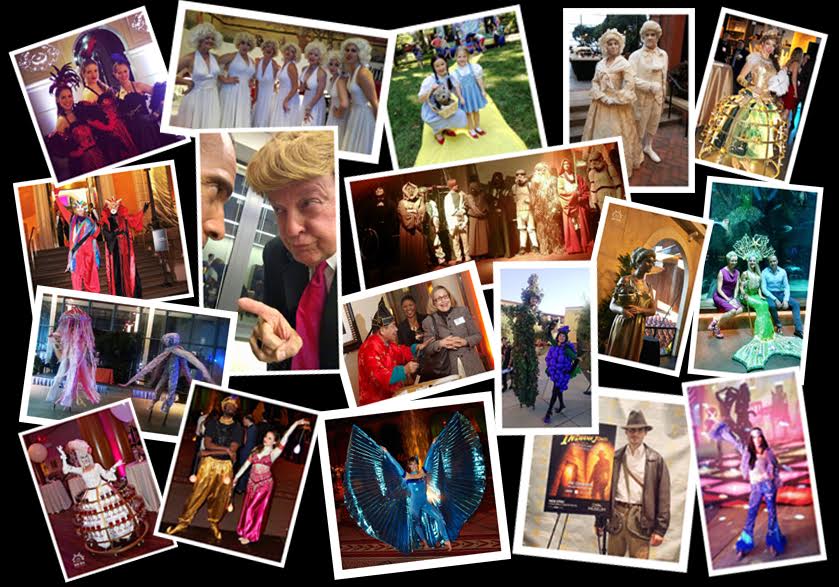
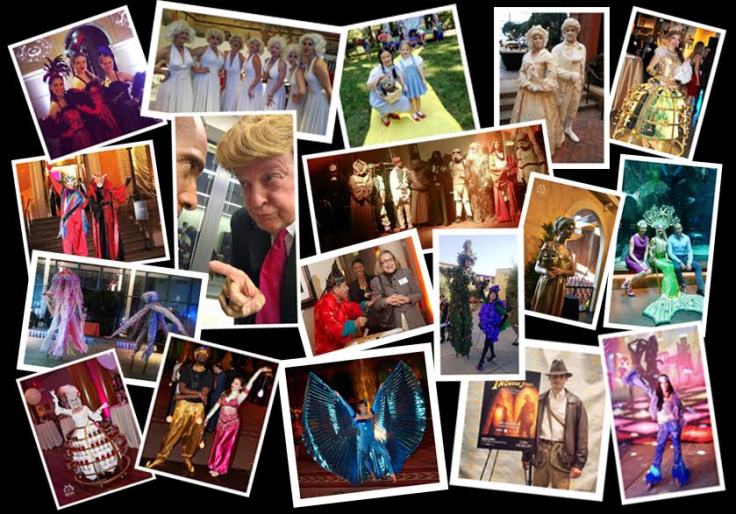
My onion novel, CHINA LILY, spans decades. My main family, the Cannaras, travel the globe (of their time, which is the Fourteen hundreds). Lots of time on ships. Lots of time on horseback.

In their distant locations over their diverse times they meet different people. These people fill the chapters they are in, but then they are gone. They are really secondary characters to the novel, but nothing could be accomplished without them. In their own time frame they are front-and-center.

This same situation happened in my *thriller*. The time frame was much different (squeezed into a few days). And the location was one city until near the end. But the nature of the immediacy and the surprising twists of plot and the intense action called upon the use of many secondary characters. They were figuratively press-ganged into action. They did their bit and were not called upon again. Louie-the-dog was to be a secondary character with a ‘walk on’ part. He stayed.

I am having a growing fascination for these secondary characters. They have to be developed within paragraphs instead of chapters. Their dialogue and thoughts have to be concise and unique from the start. They possess a freedom of action the main characters do not have. They are not loaded down with baggage. They are a challenge to write and difficult to rein in. They are generally saucy and rarely ponder their lot. Yet they must be real and not just plot devices. They have to be taken at face value and accepted quickly. They must stand out in the background.

A novel of only secondary characters – hmmmm . . .

DE

[image] https://3.bp.blogspot.com/-vZSuKHVPTpI/VsNpi-m3ekI/AAAAAAAAU7I/8JA_0K9LM_g/s1600/2015%2Bcollage.jpg

Engaged And The Joy Of Marriage From “Kafka In The Castle”

ca246f_f0a30bdddff74353b79db12596f98ae9

09 July 1917

We have become engaged for the second time. Joy from my parents. My beaming father. How glad I was that Ottla wasn’t there. I looked around the room and saw what awaited me – overstuffed furniture and mouths full of banality. F. had tea with us, and nibbled on the dainty cakes. And I knew she was taking in each chip of the porcelain to relay to her mother. Weighing and judging.

My father is crude, my mother gushes, but there is obviously money. And, I am a Herr Doktor of Laws, and well advanced up the ladder of bureaucracy. Yes, there are some elements of the brooding author, but that can be restricted to conversations with my friends after dinner on Sunday. Or, a couple of evenings at the coffee house a month. Those should be avenues enough to tend to my funny, little needs. A few hours in the dark, twitching like a timid rodent.

Then, each week could begin anew. We even did our social duties, Felice and I. Visiting friends and relations with the joyous news. In a stiff, high collar which I had to borrow from my father. Much to his delight. We last called upon Max and his wife, as afternoon dragged into evening. Plates of food and platters of words. Max could not take his eyes from my chafing collar, and I knew he wanted to ask about it. But he dared not. Not in front of wife and fiancee. His and mine. He could not contain his smile however. Horror and humour. Mine and his. At least the social niceties were over once we left his house – except, of course, for my walk with F. back to her hotel. She debated whether or not to return to my parents, but I dissuaded her. She might have allowed an embrace on the outside steps, had I but tried. Had I only tried.

But I scuttled away, ascended some other steps, and here I am within this tiny house. The door is open because of the heat, but even had I locked and bared it after me, I fear they all would still enter. Would walk through the walls if necessary. Would scale the castle with ladders, if necessary. They are never going to let me rest. Even as I sleep, they will be lurking in my dreams.

DE

(image) http://static.wixstatic.com/media/ca246f_f0a30bdddff74353b79db12596f98ae9.jpg

Turning A Novel Into Film – Characters On The Loose

screenplay_square

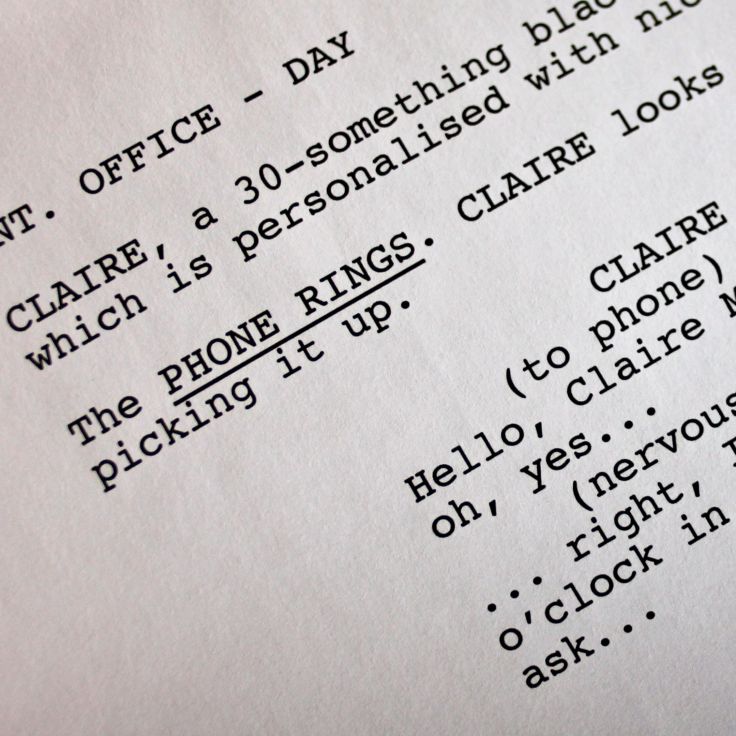
When adapting a novel manuscript to a film script, I realize it will take a whole host of other people to tell me how successful I might be. I’ve done this twice before, and realize that I must not only ignore my usual method of writing, but often go exactly against it.

I attempted to “learn” how to write for film. I read many instruction books, attended classes and workshops, and had meetings with people. I read many film scripts, which did help me accept the (to my eye) arcane format. But the one thing that actually turned me visual, was the comment of a writer/editor friend who said, after reading my attempt, “I can’t see it.”

That is, it did not cause visual action in her mind.

And I understood.

Perhaps the biggest hurdle is to accept that a movie is not a book, and that changes, additions and omissions will be necessary. As with a play, there is a finite time limit, that generally clocks in under two hours. The threads and plot points of a movie are different. And the characters (I swear) feel this freedom, and choose to accentuate other aspects of themselves than revealed in a novel.

The very fact their paragraphs of dialogue are best reduced to two or three lines makes them uppity. And because they can, in mere seconds, be in diverse locations, performing radically different actions, they become exact without apology. They don’t have to fill in the spaces.

The writer has to fill in the spaces however, and do so with visual stimulation. The transitions have to be swift and their descriptions exact. The road is always the fast lane and the characters kick the tires with gusto.

DE

(image) http://www.indiewire.com/wp-content/uploads/2014/11/screenplay_square.jpg

Kafka Sweeps Away Dust, Gold And War [from: Kafka In The Castle]

objects-of-use-chinese-broom-remodelista-518x600

27 November 1916

Should I comment upon my unique and strange surroundings – this tiny house of Ottla’s. Not shared with a fiancée, but a sister. This place would not do for Felice, it is too small and too spare and too far from the heart of the city. But I feel secure against the winter. Up here in the castle.

As with all the tiny houses on Alchemist Lane, this one has its history of the quest for gold. Thus I fit right in, for I am after such purity.


17 December 1916

Although Ottla seems content with just her Sunday afternoons in this tiny house, I was careful to make certain no one was here before I entered. Since the Alchemist Lane ends in a stone wall, all who enter have to return the way they came. How awkward. Ottla would just smile and ask after my health, it is I who would look at my feet. My love affair of letters would blush on such sure ground. But, we did not pass.

This place is of course a fantasy, a burrow in which to hide through these winter months. It’s barely big enough to bury a man properly, yet before Ottla moved in, a family of eleven crammed their lives into it. Knowing how fortunate I am in this world never seems to help in mine. I thought I might leave both worlds, with the help of the army. Friends and family have told me how grateful I should be that I am unable to join. My official dispensation because I am indispensable to the bureaucracy of the Empire. F. looked upon me in disbelief when I told her I would try again to enlist. Perhaps I can gather the spirits of the necromancers who have lived on this lane to assist me.


18 December 1916

I could, with my broom, sweep away the glory of war. It is less than the dust of this tiny house.

DE

(image) http://www.remodelista.com/wp-content/uploads/2015/03/objects-of-use-chinese-broom-Remodelista-518×600.jpg

Franz Kafka Turns Words To Gold On The Golden Lane

3848764367_a7b9e65ed5_o

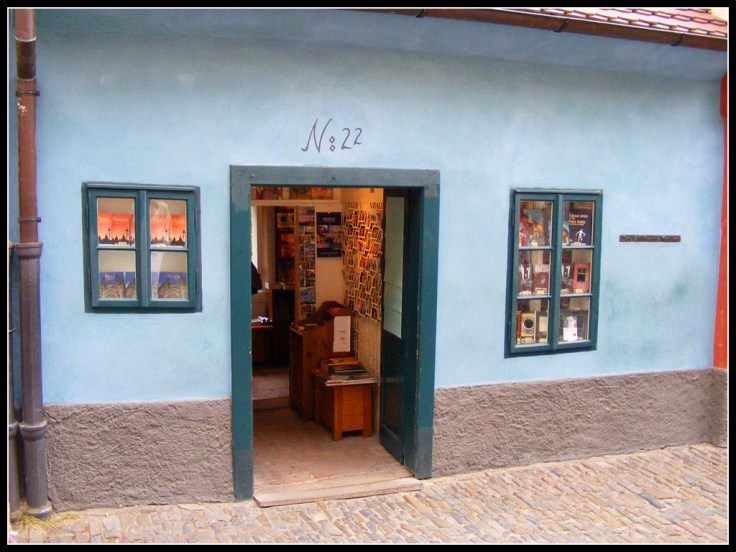
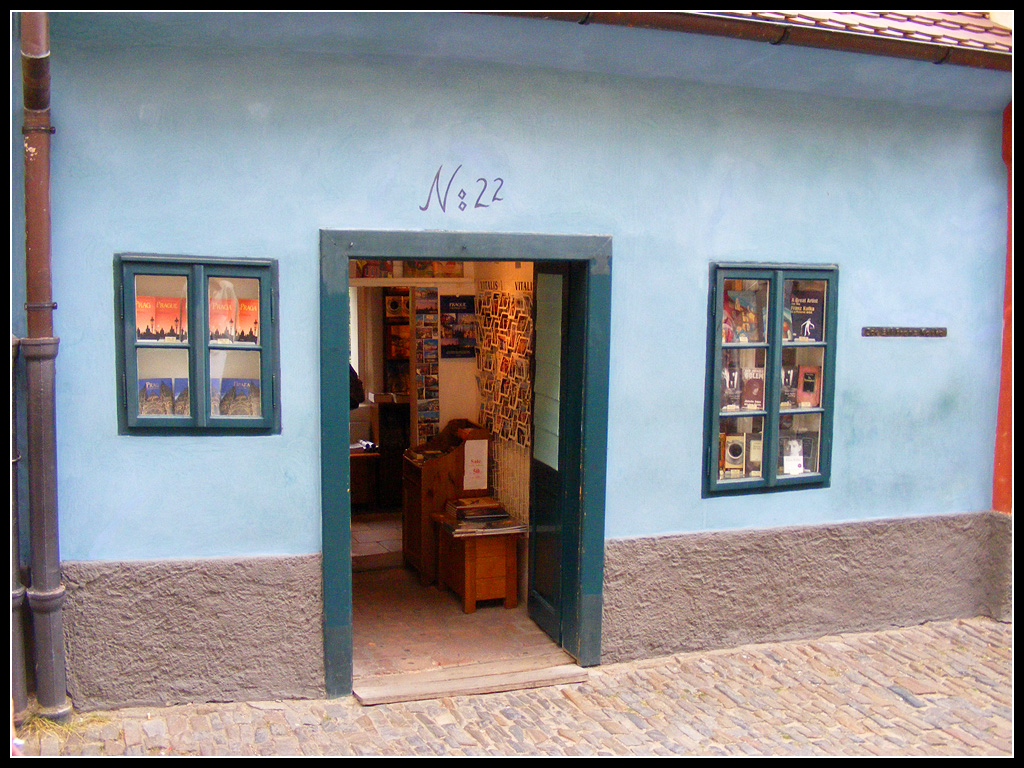
[Kafka’s house on The Golden Lane]

A burrow offers security and comfort.  Kafka found both in his sister’s tiny house on the Golden Lane.

The Golden Lane is a narrow, dead-end yet massively historic lane, hugging an interior wall of the huge Prague Castle. Centuries ago the small buildings along the lane housed workers of the Castle, including some resident alchemists. Thus the name.

Ottla – Kafka’s sister – had rented it so she could spend time with her lover, and not be bothered by parents and comments. Her lover was not only a Christian, but he was soon going to leave to fight in World War I. Time was precious. However, she rarely had opportunities to use it other than the weekends, so she offered Franz the use of the tiny house for most of the time. And use it he did, though he never stayed the night.

Through fall, winter and spring Kafka wrote a whole book of short stories there. For a single block of time, it was one of his most creative periods.

When I visited, under the Communist rule of the time, it had been converted to a book store. Of course (which he would have appreciated) there were no books by Kafka for sale. Today he is displayed in the windows.

It was only when I went thorough the small rooms, and looked out the window into The Stag Moat, that I realized how important the house would become in Kafka In The Castle, my novel about Kafka. It was cozy – even with the space cramped by tourists. It had been little altered. I could easily imagine Kafka looking through the same glass and walking through the same doorways. No doubt stooping because he was tall. Research met reality.

One of the last stories Kafka wrote, during his final year in Berlin, was called The Burrow. A version exists and is published, though a longer version is supposed to be among his ‘missing’ papers. In it a tiny animal keeps incessantly burrowing to keep away from an enemy. A vague noise convinces the animal to burrow deeper. Yup – that’s Kafka.

DE

(image) https://farm3.staticflickr.com/2645/3848764367_a7b9e65ed5_o.jpg

Eating Out In New York – Free Entertainment With Roller Skates

font-b-black-b-font-adult-double-font-b-roller-b-font-font-b-skates1

My friend, Google tells me that “over the transom” is still a viable term. In this case it refers to a manuscript accepted by an editor submitted cold – perhaps even from the dreaded slush pile.

At any rate, my manuscript for A Lost Tale was accepted “over the transom”, and I was asked to New York to meet the editor. Although I had experienced and appreciated Montréal, Toronto, London, Berlin and other large cities by that time, I had not been to New York. Many events of that trip are memorable, but none more than my “lunch” with the editor.

The editor took me to some dark and trendy place for a late lunch. There were not many people there and, restaurant fiend though I am, the food was not my top priority. Discussion of “the work” and proposed changes was more on the menu for me.

However, as I sit across the table from my editor, I can not help but notice a man seated by himself beside the wall. He is tieless and shirtless and, though the lighting is dim, what there is reflects from his naked skin. He sits with a beverage and seems to hum to himself. My editor is discussing both the menu and some confusion he perceives at the beginning of my novel. I note items on the menu unknown to me and am doubly confused.

The shirtless man at the other table increases the volume of his humming and eventually a waiter goes to him and has words. The shirtless man has words back, but they sound like gibberish. At my table the editor suggests something from the menu and I happily comply. There is wine.

Whilst I eat and listen to suggestions, the shirtless man is spoken to by two other waiters. As I (wisely) restrict myself to a second glass of wine, two uniformed policemen enter the restaurant and approach the shirtless man, whose gibberish had increased even more in volume. In the course of a few minutes three other uniformed police officers – one of them female  – arrive on the scene. They are now ranged around the shirtless man and his table. I finally tell my editor what is happening behind him and why I am not concentrating fully upon his suggestions. He turns around.

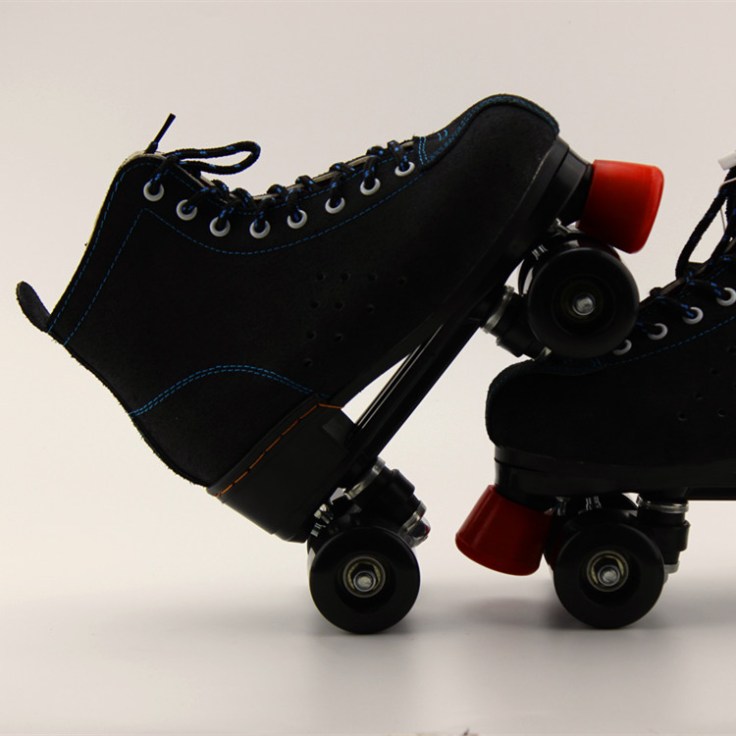
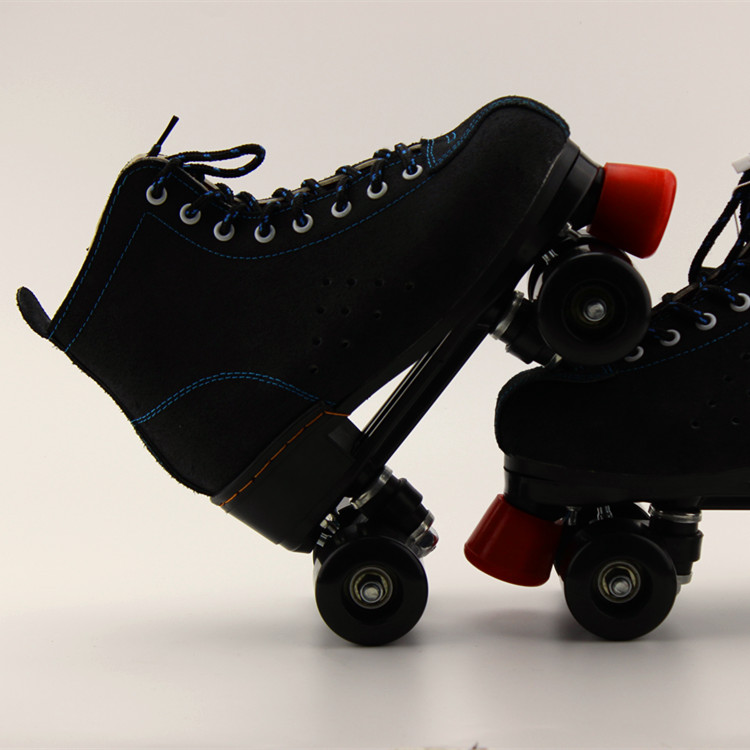
Two of the officers remove the table from in front of the shirtless man. Two others, one on each side of him, haul him to his feet. It is then that we see his shirtless state continues all the way to his naked feet. The female officer takes the tablecloth from the table and drapes it around him. The four male officers form a circle around the naked, shrouded man uttering his gibberish, and hustle him from the restaurant. The female officer picks up what appears to be a pile of clothes from beneath the table, and a pair of roller skates, and follows them.

I say to my editor that I have never seen anything like that.

My editor concurs.

DE

(image) http://g02.a.alicdn.com/kf/HTB1FsWuKFXXXXcrXXXXq6xXFXXXD/-font-b-Black-b-font-adult-double-font-b-roller-b-font-font-b-skates.jpg

Reality and Art and the World Between

THE REALITY: (from REALITY)

A few years ago I had cause to walk the grounds of a Catholic college. I did this often, as it was a large and peaceful place to wander. There were some paths, some gardens, some benches, wide playing fields and even a stroll beside a river. A peaceful retreat from the city.

I did meet one ancient priest telling his beads (there was a ‘retirement’ residence also present) who gave me a jovial ‘good day’. He was walking the paths through the trees (as was I) and eventually settled on a bench (as  I did not). I kept through the trees, which were really planted in individual copses. enjoying refuge from the sun. The trees seemed to be all pines, with full and tightly packed branches. As I went through one such group of firs, I looked between the trees. There was a statue on the other side. I circled and went up to it. As I approached I was overcome with the oddest feeling of familiarity, though I knew I could never had been there before.

And then.

And then I realized what it was.

It was a scene I had created for my two ‘Satan’ novels. A central character has the statue of an angel within a copse of firs in his back yard. My novel has an angel statue ,and reality had the Virgin Mary. But, still . . .

I’ve written of many real places which I have visited, but none took me so aback as this.

THE ART: (from THERE HAS BEEN A SIGHTING)

Mr. S. unexpectedly takes her arm, and begins to lead her along a winding, flagstone path. She has never seen such large pieces of the stone, and they glisten as if polished.
The path skirts a small stand of black spruce before it continues to the river. He stops her at the mouth of a gravel walkway leading through the trees.
“Let’s pop in here.”
“Your little acre of the Black Forest?”
“Hardly an acre.”
“Precision.” Breeze laughs. “Whatever would my father think of you?”
“Does any father think well of any man when his daughter is concerned?”
“Probably not.”
“No,” agrees Mr. S. “So not to worry.”
“He would think even less of someone leading his daughter down the garden path,” observes Breeze.
“That would be before he saw what I am about to show you.”
Mr. S. holds her arm tightly, and guides her onto the gravel walk. It leads directly to the base of a tree, then makes an abrupt curve between the largest of the spruce.
One of the boughs is so low Breeze ducks her head. She has the sensation of being in the midst of a forest, for the heavy branches obscure the surroundings.
“If I may be permitted a moment of drama.”
Mr. S. covers her eyes and speaks softly.
“Will you turn to your right, and take a few steps?”
Even though he had asked, Breeze is startled as he gently eases her forward, and she feels a slight urge to resist him. Her steps are more cautious than the gravel walkway demands, and the press of his body is noticeable. She counts her footsteps under her breath. She is surprised when they stop at half a dozen, and he quickly removes his hand.
“She’s beautiful.” Breeze stares, open-mouthed.
“Yes.” Mr. S. is pleased. “I think so, too.”
“An angel in the woods.”
“The angel of peace.” Mr. S. walks her around the statue. “Not at all bad for a knockoff.” He pauses behind the wings.
“A knockoff?”
“A reproduction.” He puts his foot on the pedestal, and leans forward. “I don’t really know how old it is. Certainly last century – possibly before.” He points to the blue folds. “I’ve had the paint cleaned and touched up. Is it too garish?”
“It … it stands out.” Breeze hunts for a word. “Let’s call it vibrant.”
DE

Blog at WordPress.com.

Up ↑