Search

kafkaestblog

It is a whirlwind in here

Category

life

God And Death Kept Me From A Poetry Reading

emily-dickinson-because-i-could-not-stop-500x344

Admittedly I set out later than I should, but the poetry readings were to go from 7-9. Enough time for some of it. However, as I was a few blocks away from the harbour (yes, I was also going to stop by the harbour first) I heard Latin chanting.

I greatly enjoy Latin chanting, so imagine my surprise. It turned out there was a large tent set up in a parking lot beside the Roman Catholic cathedral. Six men were chanting a service for a small group. It seemed related (in some way) to the jazz festival happening in the city. They had mics and lights. I lingered by the  fence and listened. Evocative and effective.

However, I did feel I should go to the poetry readings, so off I went.

But I gave in to my temptation of visiting the harbour on the way. It was there, as I sat looking out to sea, that an elderly, white haired man struck up a conversation. A visitor who had arrived by train for a week of vacation.

The first vacation without his wife, dead these fourteen months.

She was eighty-four.

When he said this, he saw the look of surprise on my face.

“Bet you can’t guess my age,” said he.

I answered, with some truth, that I never answer that question.

“Eighty-one,” he said.

I granted I would have shaved a dozen years off his age.

“Married sixty years,” he said. Always had travelled with her. Always went by car. “But it wouldn’t be the same,” he said. So he took the train.

So – yes – I stayed to talk to him.

“Get up every morning to fill the day is my motto,” he said.

So I answered his questions about the islands, and if the helicopters flying overhead were military, and if all the ships needed the use of the tugboats we were standing beside, and was there somewhere close he could buy magazines, and how he got this real good travel deal through CAA, and how he talks to everyone.

“Is that really the ocean out there?” He pointed.

I nodded.

It was.

DE

(image)http://www.poetseers.org/wp-content/uploads/emily-dickinson-because-i-could-not-stop-500×344.jpg
Kafka And His Very Young Love

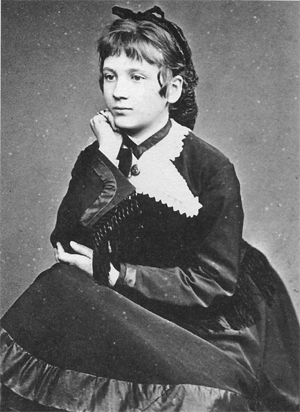
106933578_o

Gerti Wasner

Kafka liked the ladies and he had many relationships.

While in the first year of his ‘love-of-a-lifetime’ affair with Felice Bauer (they were engaged twice but – indeed – never married) he met “The Swiss Girl”. In his diaries she was only referred to as W. or G. W. They were together for ten days in a spa on Lake Garda.

She was a Christian. He was thirty, and she was eighteen. However the relationship (apparently sexually consummated) made a great impression on him for the rest of his life.

Research over the years  finally revealed who she is, and Google search even provides photos. Her name is Gerti Wastner.However, very little else (as far as I can find) is known about her.

Where did her life lead after an encounter with Kafka?

Here are some of Kafka’s actual diary entries about the incident.

DE

~~~~~~~~~~~~~~~~~~~~~~~~~~~~~~~~~~~

15 October 1913

Perhaps I have caught hold of myself again, perhaps I secretly took the shorter way again, and now I, who already despair in loneliness, have pulled myself up again. But the headaches, the sleeplessness! Well, it is worth the struggle, or rather, I have no choice. The stay in Riva was very important to me. For the first time I understood a Christian girl and lived almost entirely within the sphere of her influence. I am incapable of writing down the important things that I need to remember. This weakness of mine makes my dull head clear and empty only in order to preserve itself, but only insofar as the confusion lets itself be crowded off to the periphery. But I almost prefer this condition to the merely dull and indefinite pressure the uncertain release from which first would require a hammer to crush me.


20 October 1913

I would gladly write fairy tales (why do I hate the word so?) that could please W. and that she might sometimes keep under  the table at meals, read between courses, and blush fearfully when she noticed that the sanatorium doctor has been standing behind her for a little while now and watching her. Her excitement sometimes—or really all of the time—when she hears stories. I notice that I am afraid of the almost physical strain of the effort to remember, afraid of the pain beneath which the floor of the thoughtless vacuum of the mind slowly opens up, or even merely heaves up a little in preparation. All things resist being written down. If I knew that her commandment not to mention her were at work here (I have kept it faithfully, almost without effort), then I should be satisfied, but it is nothing but inability. Besides, what am I to think of the fact that this evening, for a long while, I was pondering what the acquaintance with W. had cost me in pleasures with the Russian woman, who at night perhaps (this is by no means impossible) might have let me into her room, which was diagonally across from mine. While my evening’s intercourse with W. was carried on in a language of knocks whose meaning we never definitely agreed upon. I knocked on the ceiling of my room below hers, received her answer, leaned out of the window, greeted her, once let myself be blessed by her, once snatched at a ribbon she let down, sat on the window sill for hours, heard every one of her steps above, mistakenly regarded every chance knock to be the sign of an understanding, heard her coughing, her singing before she fell asleep.


22 October 1913.

Too late. The sweetness of sorrow and of love. To be smiled at by her in the boat. That was most beautiful of all. Always only the desire to die and the not-yet-yielding; this alone is love.


Translated by Joseph Kresh

Kafka And His Father Have An Understanding [from: Kafka In The Castle]

kafkafather

01 January 1917

There was a cloud caught in the branches of a tree today, outside my parents home.

Or so it appeared.

I got up from the cot and went to tell Ottla, but she was clearing the kitchen, tending to the dishes. So I was radical, unthinking – driven by haste – and told the only one not consumed by labour. I told my father.

“In the trees?” he asked.

I propelled him from his chair, thrusting the papers aside. He followed me, and I could see the surprise on his face.

“Where?” he asked; and I pointed out the window.

“But I see nothing.”

“Oh, you have to lie on the cot.”

“On the cot?”

“And with your head just so.” I pushed him onto it, and he lay, looking sideways.

“But you are right,” he said.

I thought because of the holiday he might be humouring me, but then I saw that his jaw hung open, and his face was astonished.

Does the boy never grow, that he can feel so good to be vindicated by his father?

DE

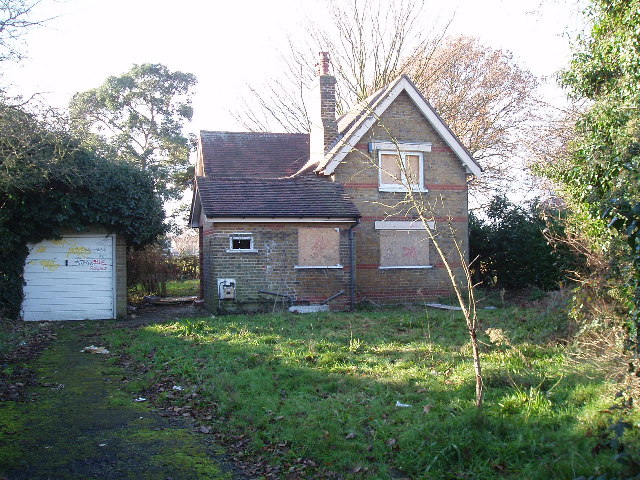
House Of Ghosts Waiting For Halloween

Novel Excerpt:  

(image)

I http://s0.geograph.org.uk/photos/09/51/095181_9494027f.jpg

   It had been a house of dreams, it was now a house of ghosts.

   Ghosts tranquil and benign peered through the dusty upper windows, stood in wait behind the boarded doors. The dreams of long ago, which had tumbled down the stairs, and frolicked through the rooms, were now memories in the minds of ghosts.     

   The ghosts were themselves memories, destined to further fade with each new birth. But there would be no births in this house, as it slid inexorably toward decay. The lackluster brown shingles would be more smudged, the remaining panes of old glass would break, the floors would warp and collapse, the unkept roof would succumb to the years of harsh weather. 

     Even the `No Trespass’ sign was barely legible. Then where would the ghosts go?

     Blaine left his car and walked toward the house. 

     If he had eyes to see, who would be there to greet him?  Would children’s dreams, fair-haired and boisterous, burst through the front door and surround him in games of tag and laughter?  Would he get caught by their enthusiasm (would he become a child himself), and race behind the trees, burrow into the hay, hide between the bins of potato and turnip, intent not to be `it’. 

     Or would he meet the ghosts, quiet and tentative at the top of the steps, moving slowly with their uncertain smiles. Would they greet him with a wave, invite him into their warm-smelling kitchens, offer him fresh tea, and squares right out of the pan?  Would he sit in the stream of fall sunlight flowing across the well-oiled floor, and talk about childhood?

     Blaine walked part way up the drive before he stopped.

     He knew what lay beyond the boarded windows, and the sagging door upon its rusty hinges. Wallpaper would be water-stained, and curling off the plaster walls. There would be lumps of refuse in the corners of the rooms, with one inevitable rusty bedframe lying on its side. There would be gaps in the ceiling, where beams of sunlight shimmered through motes of dust. There would be holes in the baseboards, where earnest rodents made comfortable homes.

     There would be musty smells offering a hint of long-ago meals, and something gone bad in the pantry. There would be one upper window (at the back) which still had a tattered lace  curtain, half obscuring what had once been totally private. At night he would hear bats.

     It was not this house he had come to see, of course. Of course, not this derelict house, which he knew could never be restored, and which was so beyond help even death slept while visiting. 

DE


Blog at WordPress.com.

Up ↑