Search

kafkaestblog

It is a whirlwind in here

Category

life

TWO BEAVERS ON THE LEFT BANK

b9316892033z-1_20150407140501_000_gqhaejp35-1-0

I was walking along the river and heard the strangest noise. It was one of those noises which, when I found out what It was, sounded exactly as it should. A beaver was chewing at a branch on the bank of the river. First there were small rolling noises as the branch went through its hands, and then the ‘gnaw gnaw gnaw’, and then the turning noise and the cycles were repeated.

This went on fifteen minutes or so, then the beaver and I both heard noises in the water. We both saw another beaver approaching. The beaver-at-gnaw quickly went in her direction (though I can only guess which sex was which). They swam toward each other, then rubbed faces. The approaching beaver made small bawling noises like a young calf. They rubbed bodies and seemed to sniff each other, then they swam in different directions. This performance – the swimming away, the languid circling, the approaches – went on for twenty minutes. A couple of times the ‘gnawing’ beaver clambered over the over beaver’s back, but this lasted just a few seconds. The beaver which approached rubbed noses once again, and made the bawling sounds one more time.

I never appreciated how large beavers are until one of them came up on the bank. The water was clear enough to see their feet and tail move underwater (I wonder if the portion out of the water might have the 1/10 proportion of an iceberg). The sun was setting and they became difficult to see. However they decided to part anyway. One began to go down river toward the harbour and one headed to the other shore.

But I bet they were going to meet the next day.

(image)https://www.gannett-cdn.com/-mm-/4830728e976abc86eb61c42be56b80bf12a60879/c=0-75-3000-2325&r=x408&c=540×405/local/-/media/Salem/2015/04/07/B9316892033Z.1_20150407140501_000_GQHAEJP35.1-0.jpg

Franz Kafka Asks An Age-Old Question (from Kafka In The Castle)

if-book_thumbnail


In my novel, Kafka In The Castle, I fill in the missing entries of his actual diaries.  There are many days to fill, as he either did not write during these days, or he destroyed the record.

11 June 1918

“What if?”

That was a game I used to play with my sisters when we were little: What if we were children of the Emperor? What if we dug a hole in the ground all the way to China? What if we had our own house? What if we lived by the ocean? What if we went to church (those mysterious churches)? What if we lived on the moon, would we be able to yell down our greetings? Ottla had the least interest in the game, yet she made up the best questions.

I find today that when I `what if’, I don’t think so much of the future, but wonder about those things I might have done in my past, which I ignored or refused.

Felice, of course, with two engagements never fulfilled.

Other work – I’m a good enough lawyer, I could get other work.

Prague – this ornate tomb – to have lived a life elsewhere. Berlin, Palestine, Amerika. Zurau.

What if I had fled with the Swiss girl? Her youth, her zest – I might have learned to sing.

What if I were less exact – less austere?

What I might have written.

What I might have lived.

What if I had asked far fewer questions – and taken more time to better understand the answers.

(image)https://pbs.twimg.com/profile_images/1757693365/if-book_thumbnail.jpg

Why There Are Many Reasons To Give Thanks For My Life

55e2a08b36419_324313b

Buddy and I are waiting for a bus. Hours ahead await us on the trip, though we go to different destinations. I guess proximity is the reason he starts to talk to me, there being nobody else close.

This conversation is edited, though mostly for continuity.

Buddy : Gotta great day.
Me: Yes. (and it is – the weather is some grand)
Buddy: I’ve come half way across Canada, and still have to take the boat to Newfoundland. (this means another 8 hours on the bus for him, and 9 hours on the ferry)
Me: Hope you can sleep on the boat.
Buddy: And then another twelve hours hitching across the province.
Me: You sure have me beat. (I have 7 hours ahead of me, half by train)
Buddy: I don’t know what will happen. My friend says the church will help people.
Me: You’re not going home?
Buddy; Nope – all dead.
Me: That’s tough.
Buddy: That’s my Mom there. (he points to one of his bags) Got her ashes to bury.
Me: You have a sad time.
Buddy: Found her at the end of the driveway.
Me: What?
Buddy: In the urn. My girlfriend threw all my stuff out. That’s where it rolled.
Me: All your things?
Buddy: I had to store my stuff. Just money left for the bus and the ferry.
Me: I gotta say that sounds cold.
Buddy: She’s keeping my last disability cheque.
Me: What?
Buddy $1,700. Says I owe her.
Me: Do you?
Buddy: I guess. Anyway, there’s no going back there.
Me: That’s what it sounds like.

(At this point the bus driver arrives, asking what luggage is to go under the bus)

Buddy: Not that one. (he points to the one with the ashes) That comes with me.


DE

When The Other Animals Help Humans To Stop Satan

212189176054008187132011038171243114197246168206
A prominent American politician (you know who you are) recently opined that a gang of murderous humans were a bunch of animals. We are all animals, and it should be of no surprise that the other animals never act with the hate and horror of humans. The true insult is to call someone “human”.
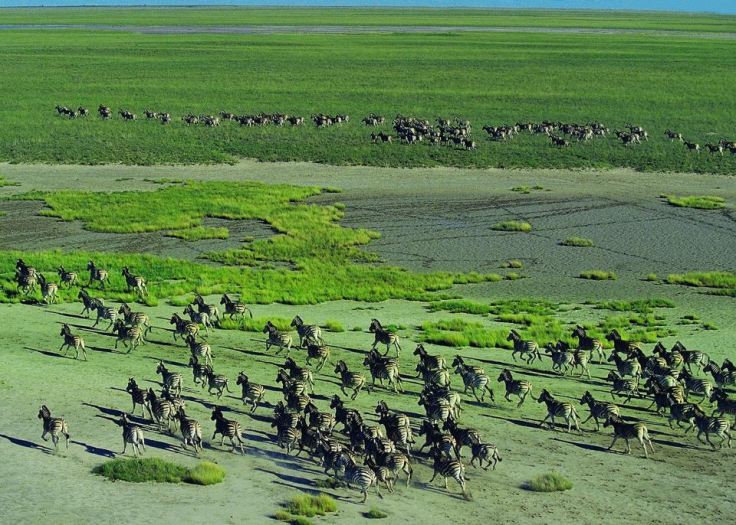
In my first Satan novel, There Has Been A Sighting, my human animal characters join with the other animals on the Makgadikgadi Salt Pan in Botswana to confront a true Beast. This is the abridged encounter.
~~~~~~~~~~~~~~~~~~~~~~~~~~~~~~~~~~~~~~~~~~~~~~~

“Caleb and I agree.” The old nun glances at Dorkas, then looks back to the Kgosi. “You must have your people move with them.” She speaks loudly, so other ears will hear. “Whether they join us, or we join them – we are all in this together.”

“My people – ”

“Will follow the crook of your finger.” Caleb is now standing on the other side of the Kgosi. “That’s what Dorkas told me, and I see she is right.”

“Am I now to trust the wild animals?”

“They are here.” Caleb points. “One must assume they are trusting us.”

“It seems to me.” Dorkas speaks softly. “Their leap of faith is greater than ours.”

“I will do as the white witch tells me.”

“No.” Dorkas puts a hand on his arm. “You must overcome your human limitations. You must act with the conviction of these other animals. This is not an order for me to give.”

“Talks With Devils wants a lot from me.”

“And I plan to get it.” Her grip becomes so fierce she pulls the Kgosi toward her. “And I plan to get it here, from this second forward.”

Letsolathebe looks around the tight circle of faces. He does not see fear or hesitation, and he regains his confidence.

“You seem ready to walk into Hell.”

“It’s an easy walk.”  Mother Ursula smiles.

“Is it an easy walk back?”

“Jesus did it with alacrity.”

“I am not the God woman’s God.” Letsolathebe wonders at the comment. “To say that puts a great burden on me.”

“Our Lord was also a human being.” The old nun chuckles. “And looked a lot more like you than me. It is as a man we know Him, and through His trials as a man that we more fully understand God.”

“Didn’t He die first, before He entered Hell?”

“There are drawbacks,” admits Mother Ursula.

“I can not tell my people that death is merely a drawback.”

“Perhaps we tell them too much as it is.” Caleb raises his voice, and Shona does likewise. “Perhaps it is time we listen.” He turns a slow arc to address their silent followers. “Listen to the other animals.”

“Listen?” asks Letsolathebe.

“And smell, and use all our senses.” Mother Ursula answers. “To become like them, so we can more truly become ourselves.”

A sigh of intense interest spreads to the furthest reaches of the assembly, then quietly ceases without question or comment. They all stop to listen to the animals. The other animals.

As the sounds of the people become just breath and heartbeat, the other animals keep their silence, and keep to their waiting, but their tension eases. Their erratic pawing of the ground, which had sounded so loud on the rough, hard earth, stops altogether. They no longer search for predators, or flex their legs for immediate flight.

After a long period of time, the other animals begin to move.

They move in unison, with tentative steps of invitation. Each and every person present is startled by the slow and careful approach of one of the other animals. They no longer mingle in a random way – they are choosing partners. The people stand silent and tense, and some shiver when an erratic flip of a tail catches them by surprise.

“Jesus,” whispers Shona.

The other animals sniff their way, hunting for scents which are compatible. They rarely hesitate, although the ones which have their young are more cautious, with many a backward glance. But the young follow their parents without deviation.

The presence of young animals makes the people less cautious. They feel no threat from these small animals – if anything, they have the desire to protect them, and save their future. The people began to regret they have not brought their own children, even though they realize their offspring are far more defenceless than any of these active cubs and kids. Their children can in no way fend for themselves.

* * * * * * * * * * * * * * * * * * *

Letsolathebe marches forward without another glance, barely noticing that the child’s hand has slipped into his own. They hold onto each other for dear life and expected death, as they race toward the flickering flame held high by Mother Ursula.

“Oh boy.” Caleb sighs.

“Do we follow?” asks Shona.

“Follow?” Dorkas shakes her head. “We join them. We match them. We become one with them.” She looks at Caleb.

“Mother Ursula may be right.” He smiles. “When is the last time we had Satan on the run?”

“Now or never,” says Dorkas. “It’s as easy as death.”

Caleb makes a slight bow to Dorkas, and to Shona, and then speaks loudly so she will translate with the same force.

“It seems to me this is the perfect time for Talks With Devils to have her say face-to-face.”

And as the three begin to race headlong into the darkest part of this darkest night, the thousands of their brethren and the thousands of the other animals are right at their heels.

And that beast.

That beast of time and terror.

That beast attached to life like a nodule of cancer.

That beast as strong as any lust.

That beast spread so deeply across the expanse of the Makgadikgadi Salt Pan.

That beast, recognizing in its fetid mouth the taste of defeat, lingers on the periphery of one glowing candle.

“You will never win.” Mother Ursula speaks softly. “In spite of all your victories, we are still able to care for each other.”

And that beast, afrighted by the light, and sacrifice, and the raw power of life, moves elsewhere.

“God woman.” Sekgoma tears across the rough ground and throws his arms around her. “Mother is safe?”

“This is a madness you have brought us I don’t wish to see again,” chides Letsolathebe. But he too puts an arm around the old nun’s shoulders.

“None of us can promise that.” Dorkas is breathless.

“Talks With Devils is always so strict.”

Letsolathebe takes both her hands, and leans forward to kiss her on the forehead. And then he does the same with Caleb.

I am the Kgosi, and I tell you this. Tomorrow night we will dance, and drink, and feast.”

His gaze sweeps over his people and the thousands of the other animals.

“But no roasted flesh.”

(image)https://cdn.audleytravel.com/960/{height}/79/212189176054008187132011038171243114197246168206.jpg

Kafka Leaves One Month And Enters Another

franz-kafka-quote-people-are-sewn-into-their-skins-for-life-e1497702939327

In my manuscript, Kafka In The Castle, I fill in his missing diary entries. One hundred years ago, he started (in his way) to prepare for Christmas.

~~~~~~~~~~~~~~~~~~~~~~~~~~~~~~~~

30 November 1917

The girl, Fraulein G., wants to better herself by spending some time in Prague. She is the daughter of the most wealthy peasant in the area, and is barred from the common society around her.

It amazes me how a Christian can sometimes be treated like a Jew.

She is twenty years old, very pleasant, and has approached me in the hope I can find her a family to stay with, where she can improve her Czech, and also (I suspect) her position in life.

Her knowledge and abilities are obviously superior to most of her age and station – she mentioned a convent education – and perhaps there is a finishing school which might do her good. Max and his wife will know much more about this than me. Or my parents. I’ll ask his advice.

The girl is too timid with me – perhaps Ottla can invite her for a meal.


02 December 1917

The last month of the year, and it seems to race to its conclusion. It will certainly gallop toward Christmas, and the threat of Felice. To think that I now dread a meeting which I once would have relished with equal intent.

DE

(image) iperceptive.com/blog/wp-content/uploads/2017/06/Franz-Kafka-Quote-People-are-sewn-into-their-skins-for-life…-e1497702939327.png

The Mad Man In The Bakery On Friday 13th

praktik-bakery-barcelona-hotel-13

“Out, out – out of my way!

Don’t touch me at all,

But do as I say.

A brush on the arm

Can cause me harm

When it’s the Brush of Death

I’m awaiting.

Don’t breathe.

Your air – from inside you

– coming out at me.

How very horrible.

It now has pieces of you,

And it will corrupt.

No, don’t listen to me.

Stop up your ears and turn away.

They’re my words

And my thought

Not to be sold

And not to be bought.

Out of my mouth

From between my teeth.

Don’t you know how personal that is?

Allow me.

Allow me!

I’ll open the door, and I’ll let you enter.

Demand what you want – don’t be afraid to ask.

Make them fill your request.

I come here for bread,

And I come here for cake.

You can trust me.

Would I lie?

They don’t mind me,

They’re used to my song.

It’s entertainment, you see,

And it’s free.

Chew them up.

Enjoy them!

Those muffins look so good.

I’m only a madman in a bakery,

But I know how to eat.”

DE

(image)www.suitcaseandheels.com/wp-content/uploads/2014/10/Praktik-Bakery-Barcelona-Hotel-13.jpg

100 Years Ago: Kafka On The Move from “Kafka In The Castle”

cgwaytuxiaasez_

[The Swiss Girl]

12 September 1917

Max came to the station with me this morning, which was kind of him.

He was not in as good spirits as was I, for he does not have the joy of escaping Prague to assuage our parting.

I obviously did not help matters when I pointed to the two men carrying my things, and said that they could be carrying my coffin.

He did not even attempt a forced smile.

Or force an attempted smile.

My possessions were bundled into the baggage car, and I was prepared to be folded away there too.

But they allowed me a compartment, and as we parted, I shook the empty hand of Max.


13 September 1917

This might even be the type of place for the Swiss girl. Unfettered – perhaps singing.

I’ve had the strongest desire to be with her this morning.

Maybe I had a dream.

The strongest desire to contact her – regardless of what we promised.

But – after all these years – I probably could not find her, even if I tried.

And I have no idea who I might find if I succeeded. Not the girl of memories.

And who, anyway, would she find?

What look would cross her face and still her song?

Because – I have become me.

DE

Mother And Son In Thirteenth Century Europe

episode-of-the-child-crusade

Exercpt from: China Lily

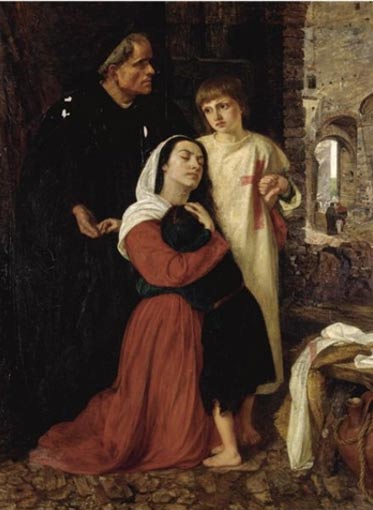
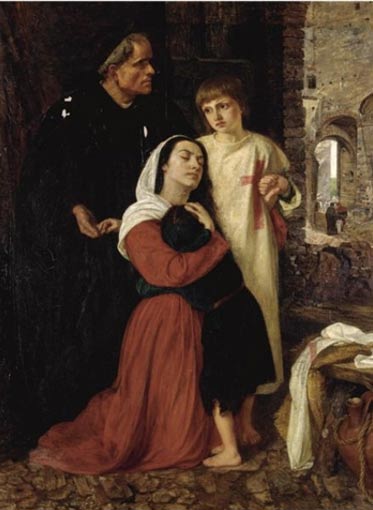
Matzerath’s mother rarely shared her thoughts with anyone. She is as elusive now as when he was a small boy being raised within the shadow of the religious buildings where she still works as a cook. Bishops and abbots come and go, and red-robed Princes of the Church make their visits, for which she must dress appropriately – but she remains. At least Matzerath assumes she is still there, though he has not been back for five years.

Matzerath is small in stature and taken to be younger than he is. At thirteen he is treated as seven. He allows this because he finds there are more advantages then penalties. He knows far more than is expected of him, and avoids many pitfalls through the guile no one expects he has. He also achieves more than is expected from him, and is given much leeway for a child. Had his real age been obvious, he would be perceived as dim-witted. Because he is thought of as a child, he is considered gifted.

Matzerath’s mother is aware of how her son is tolerated – she even encourages his guile. He is treated better than most children, whose father is absent months at a time sailing the North Sea.

Matzerath is also getting an education of sorts, which is generally restricted to the children of nobles and the wealthy. He has learned how to read and write, along with the rudiments of mathematics and geography. He also pokes his nose into the stables, and the smithy, and the carpenters, picking up their basic skills.

He follows his own mother with interest, and can chose, prepare and present many of the dishes she serves at the Monastery. For the notables at the cathedral, and other clergy, she is expected to produce more sophisticated fare. Matzerath has even acquired some of these skills, but a puny child is forbidden to appear near the high table. He does get to nibble the leavings but notes – as he also does at the Monastery – that very little is ever left.

Matzerath would have been content to stay in this arduous life seasoned with episodes of interest and learning, but his elusive nature is discovered by a visiting bishop.

The Bishop is a militant with evangelical frenzy. He is intent upon forming a Children’s Crusade to march to the Holy Land. Matzerath is not sure what this means, though he gathers it will offer an opportunity to leave the confines of the town and local villages where he has spent his life. His mother is better informed.

Even though the last Children’s Crusade happened generations ago, and the Church proclaims it was a wondrous act for the Glory of God, she is fully aware that most of the children never came back. And that the Holy Land is still lost to the grip of heathens. The murmurs from the Monastery and the high table reveal this bishop to be a renegade and unsound in judgment. His ‘new’ crusade is predicted to be a disaster. His abilities to lead it are a joke. However, he does have the ear of the Pope, and his family has much wealth to give to the Church.

Matzerath does not possess an abundant affection for his mother – not for anyone – but he realizes that regardless of the amount of work she extracts from him, she generally does what is best for him. He pays attention to her instructions and her observations and her warnings. She also encourages him to tell her what he sees and hears. As he becomes older, she also wants to know what he thinks about the things he sees. Matzerath realizes she is using him as a spy, but he does not mind. He knows his mother sometimes manipulates the information he brings for her own well-being, but these rewards also come to him.

Matzerath heeds the warnings his mother gives about some of the priests and monks and their interest in boys. He discovers this himself upon a couple of occasions, and even satisfies one priest just to see what it is like. He shares this with his mother because he knows she sometimes does the same.

DE

(image)http://www.ancient-origins.net/sites/default/files/Episode-of-the-Child-Crusade.jpg

Ghosts

real-ghost-story-george-the-friendly-ghost

There are ghosts behind the ghosts.

There are legions of the dead,

Lined up to peer

Over my shoulder.

They breathe with satisfaction,

Upon the hand

That writes the word

Ghosts.

The millions of departed,

Disturb the air enough,

To stir the hair,

On my moving wrist.

They keep a place in line,

Patiently waiting,

For me to join them.

DE

(image)https://hiduth.com/wp-content/uploads/2016/01/real-ghost-story-george-the-friendly-ghost.jpg

Create a free website or blog at WordPress.com.

Up ↑