Search

kafkaestblog

It is a whirlwind in here

Category

history

When Writing Spooks Television

81-e23a9f4fb2887
I am currently writing a *perhaps* novel (that is, perhaps it will be a novel), though I suppose  I should find out if it is a novel since I just passed the 200 page point.

In my current project, following the escapades of Alison Alexandra (entitled Stones for short), my erstwhile activist, Alison Alexandra, is a passenger on a freighter (that takes a limited number of passengers) as it delivers goods from port to port.

I’ve done a fair amount of online research into these freighter cruises as I, myself, would much prefer such a trip over the very crowded (and expensive) Cruise Lines.  But, I will research anywhere that might help my cause. So, a couple of nights ago, on television, there was a documentary about the most recent, largest, and most extravagant Cruise Ship as yet built.

I was very interested in following its construction. I was also very interested in seeing how it was run, taking into consideration the thousands of people who had to be tended to. The delivery of provisions, the kitchens, and the massive amount of work necessary to clear out thousands of folk and then greet thousands of folk on the same day, was fascinating. Not a freighter by any standard, but basic principles were the same.

Then the documentary followed the ship on its first cruise.

Now, back to my reality. At the same time as writing original material about Alison Alexandra, I have been putting a hand-written manuscript of a novel finished a number of years ago into the computer. I do one thing in the morning, and the other in the evening. So far – no problems have arisen.

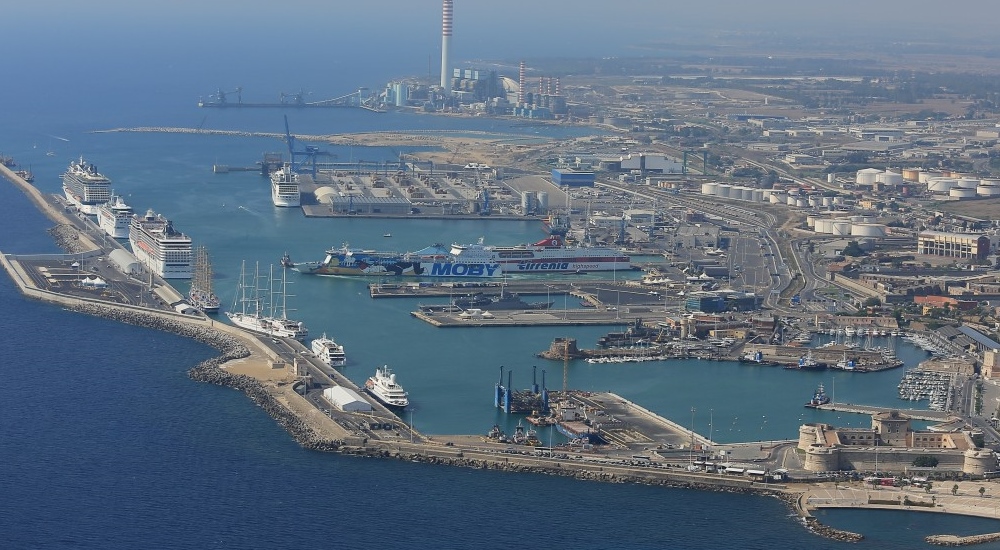
My hand-written manuscript is set in the 1300’s. The first part depicts a two year voyage from Italy to China and back. Both the voyage and events in China are described. And then, the arrival back to Italy. For four straight days, I have been transcribing the docking and aftermath of the ship at Civitavecchia, Italy. It is the closest seaport to Rome.

On television, before my eyes, after a day of writing, the Cruise Ship I had watched from inception to voyage, pulled into the port of Civitavecchia.

Maybe I should take a cruise.
 

DE

Civitavecchia (image)http://www.cruisemapper.com/images/ports/81-e23a9f4fb2887.jpg

When The Government Changes from “Kafka In The Castle”

4427677521_7a7639c63e_b

Excerpt from Kafka In The Castle

I agreed only to answer questions – that way I could not be accused of fermenting treason.

15 January 1918

This war. They wanted my opinions about this endless war. These earnest, honest men, awaiting the words from the Herr Doktor of Prague.

I agreed only to answer questions – that way I could not be accused of fermenting treason. Even in these troubled times, the law allows a man to answer questions. Assuming that the law prevails.

The law was present in the form of the policeman, attending this questionable gathering while still in uniform. He doffed his hat as he shook my hand. I would rather have him in our midst, than lurking in the hall. We have nothing to fear from him.

“Will the empire last?” This was first from their lips. And they must have needed to hear the words, for even the Emperor must know that all is lost. The Old Order, having fallen into the hands of dull and witless men, must succumb. The complacency of the age must be purged – but that has not yet happened. That awaits the next generation – and the destruction will be furious. But I do not tell them this.

I am skillful in what I do not tell them, for the truth is beyond their power to persuade or control. (Their next questions would have been more difficult had I not curbed the truth further still.) “What will happen to Zurau? What will happen to us?” And they have every right to worry. To suspect. When a society crumbles, it is those at the bottom who get crushed. But I told them that Amerika seemed a just power – not bent on retribution.

I did not tell them that a victor can do as he wants.

And I told them that we live in a secondary part of a secondary empire – the powers of destruction will be concentrated on Vienna and Berlin. I did not tell them that during the death of a snake, the spasms of the tail can be lethal.

And I told them something which could really be of help. I told them, in this coming year, to grow more food: fatten more beasts: prepare, preserve and put away. Fill their cellars and barns to bursting with food and fuel. Buy some things now, which they can use for barter later if the currency becomes worthless. Look after their families and lands.

Look after each other.

DE

The Emperor Has Too Many Clothes

colq1


Brigadier O’Donald decided that it would be a grand day to become Admiral of the Fleet – Lord High Admiral if he chose the hat with cockade and plume.

Nodding jauntily in the air, the plume put on an impressive display, as he either agreed, or disapproved, with a toss, or a shake, of his head. The dancing ostrich feathers would add a dashing air as he boarded his flagship and, with just the right mixture of stringent authority and well- tempered geniality, moved in imperious sweeps among the ranks of ratings on the aft deck.

He would, of course, be extra careful about the pitfalls awaiting a man with ornate dress sword and scabbard, among the steep steps and narrow companionways.

******

Wednesday was khaki day for Brigadier O’Donald.

It was the day set aside to remind him of the loyalty he must always retain from his men, for what was a leader without his troops? And as a treat – for really, the dull brown did not make for a very striking appearance – the would chose the tank commander’s uniform.

With its wide web belt and shiny black holster on the hip, flap unsnapped to reveal the butt of a wicked forty-five. And of course the black leather gloves, as befits a man at the controls of so much power, and the steel helmet polished to a mirror-shine.

The riding crop? Ah, the riding crop was debatable.

******

Today would have a parade. Massed men at attention with stiffly held rifles and fixed bayonets.

Brigadier O’Donald would have to chose carefully to represent his awesome power and responsibility. Cavalry boots are a must, raising half-way up the calf and resounding with silver spurs, steel-tipped toes and heels.

Then would come crisp black trousers, billowing majestically around the thighs, and kept up with a wide leather belt. He took care that each red stripe reaching the length of each leg was as straight as an arrow.

His blue tunic, he decided, would have only muted decorations and the minimum of gold braid entwined about his shoulders. He was – after all – a fighting general.

******

A civic reception is the time when Brigadier O’Donald will be on close display.
He believes he is at his most effective  when draped completely in white, save – of course – for his highly polished black dress shoes (and, in truth, he favoured white even here, but feared such footwear was a trifle effeminate). White is striking by itself, but well he knew it made the perfect background for his medals and decorations.

He has trouble deciding upon which colour sash to wear across his chest, but finally chooses the emerald green – the reception is in the public gardens. He dons his silver-visored cap, and graces his bosom with the blue Clustered Palm of Valour; the diamond centered Star of Courage; the gold Pyramid of the Oaken Grove; and seven rows of bars and campaign medals.
There are no visiting Heads of State, so he need not be too brilliant.

DE

(image)http://images.csmonitor.com/csmarchives/2011/02/COLQ1.jpg?alias=standard_600x400


Trump And Kafka Walk Into A Bar

tumblr_l0bis3rtmb1qz6f9yo1_500

~ Frank. Welcome to your world.

~ Thanks, DT. I’ve been living it all my life.

~ I’ve taken some pages out of your books, Frank.

~ I did try to get them burned.

~ You didn’t try too hard.

~ Well – no.

~ You know – neither did I.

~ I know. They all ran to your tune.

~ They did.

~ You were the Pied Piper of Havoc.

~  Worked like a charm, Frank.

~ Yes, DT – yes, it did.

~ They thought I was a bug.

~ Yes.

~ But I turned them into bugs.

~That you did, DT. And turned them against each other.

~ Yes.

~ And stood back, and watched.

~ Pretty well.

~ To the victor goes the spoils.

~ I was astounded – believe me.

~ And they keep making the same mistakes.

~ I know, Frank.  I’d laugh if it wasn’t so funny.

~ The one-eyed man is King in the land of the Blind.

~ Yes, Frank – yes. But you know what?

~  What?

~ I’ve got great vision in both eyes.

DE

(image)http://www.lavoroculturale.org/wp-content/uploads/2016/11/tumblr_l0bis3rtmb1qz6f9yo1_500.jpg

The Pagan Feast Of Christmas Where Jesus Tags Along

irish-christmas-angel

Christmas is a fake that has taken root like the holly and survives tenaciously. It has become a goodies grab fest, and helps keep our commercial society stable. Perhaps reason enough to exist.

The wily Christians conquered the outnumbered Celts and supplanted their winter festival with the birth of their God. The wily pagans live on in the numerous traditions the Christians stole, so perhaps it is a fair trade. And no doubt those wily pagans chuckle over their mead, noting this celebration of reverence has become a surfeit of greed.

I have been no fan of Christmas for decades, but its mixed legacy encourages me not to abandon it. My Christian background encourages my enjoyment of the music and traditions. Most commercial intrusions can be muted or turned off. I have some personal traditions I almost follow religiously.

I do not even rail against Santa Claus. I heard his sleigh bells one Christmas Eve when I was five. I saw his sleigh runner tracks in the snow a couple of years later.

I have even been mistaken for Santa a couple of times.

Once, in the line-up in a bank near Christmas, a two year old pointed at me. Unfortunately, my presence terrified him and he started to scream and cry. His parents said things like “But Santa is nice and kind.” I was wise enough not to go Ho Ho Ho.

Another time a family approached me as I walked in a park. A boy, who looked to be six or seven, stopped in his tracks then ran back to his parents. “Santa Claus!”  He pointed. Happily he did not cry. They walked past me in silence.

Also, for decades, I lived close to a residence where one of the very first recitations of ‘Twas The Night Before Christmas happened. The author of that stirring piece, Clement Moore, who wrote it in 1822, sent a copy to his godfather, the Rev Johnathan O’Dell, of Fredericton New Brunswick. However, the poem was not published until 1837.

This year, I have been brushed by Christmas but twice.

I entered a restaurant to meet a friend for lunch. Before any query was out of my mouth, I was ushered to the correct table. I found out the maître d ‘ had been told to be on the outlook for Santa Claus.

And, just this morning, I was told by a revered friend and writer that she was going to write a Christmas Eve column about how silly Christmas really is.

Silly is a kind word.

DE

(image)http://www.irishcelticjewels.com/celtic-wedding/wp-content/uploads/2014/12/irish-christmas-angel.jpg

Eating Fine Food In 13th Century China

In my novel, China Lily, my main characters, Cepa Cannara and Matzerath, are on a year-long trading voyage from Italy to China on the good ship The Pegasus, thirty years before Marco Polo did the same. In this segment, they have a meal with their host, Lu-Hsing.

~~~~~~~~~~~~~~~~~~~

delicious-oyster-omelette

“You boys are in the Port of Zaitun.” Lu-Hsing speaks in an authoritative tone. “Fish a speciality.”

“There must be something else.” Matzerath points. “Look at all the cooks.”

“No soup?”

“Pah!”

“Trouble-making Round Eyes.” Lu-Hsing points to a wok near the end of the aisle and starts to walk. “We’ll try there.”

“What does he have?” Cepa falls into step behind Lu-Hsing, followed by Matzerath.

“Oyster omelette.”

“Eggs?” asks Matzerath.

“As many as you want.”

“That will take a big pan.”

“He can use a high-sided wok.” Lu-Hsing pretends to whisk something in a wok. “Plop it right onto a plate.”

“We don’t have dishes.” Cepa suddenly realizes the fact. “We haven’t been back to The Pegasus all day.”

“Lu-Hsing share you his.” He barks an order at the cook, then turns back to Cepa. “Stay right here. I’ll get them from my table.”

Cepa and Matzerath stand and watch the cook. Cepa notes he is using wood and not the black rocks for his fire. Some oil is dropped onto the metal and immediately sizzles. The cook holds up his hand and extends his fingers; one, two, three, four, five.

“Will you want some?”

“God – yes.” Matzerath nods.

Cepa holds up five fingers and the cook grins. He takes an egg in each hand and hits them together. The upper shell is flipped off and they pour into the wok. He repeats the gesture and the eggs land on top of the others. The last egg is dispatched on the metal rim of the wok and added to the rest before a hint of cooking has begun. The cook then begins to whisk and slide the eggs along the side of the wok before Matzerath has time to make a comment.

“I’d like to see you do that on The Pegasus,” says Cepa.

“I break eggs all the time.”

“I know.” Cepa laughs. And we eat the shells to prove it.”

The cook now twists and shakes the wok by its two handles over the fire. The eggs slide up and along the sides, then settle more thickly near the bottom. With a grin and a twist of his hands, the cook turns the wok right over. The eggs start to slide out with a couple of drops hissing into the fire. Matzerath’s mouth falls open as the cook rights the wok so quickly that the eggs drop right back into it, now cooking on the other side. The cook puts the wok back on the fire.

“Bet you can’t do that,” says Cepa.

“Just once.” Matzerath laughs. “But the whole ship was heaving at the time.”

The cook begins to nudge the eggs together with a spatula. With his other hand he sprinkles a few drops of brown liquid. Then he adds some coarsely chopped shoots of a green onion.

“Hah!” Matzerath slaps Cepa on the shoulder.

After a quick swirl of these ingredients the cook plops in a bowl of small oysters. He takes his time with these, spacing them with deliberation over the quickly cooking eggs. Then – with a flourish – he scoops up a handful of flower blossoms and sprinkles them over the whole bubbling mixture.

“What are those?” Matzerath peers into the wok.

“Chrysanthemums.”

“We’re eating flowers?’

“When in Rome …”

The cook adds a further dash of the brown liquid and then folds the eggs neatly in half. He flips the whole omelette to the center of the wok and sprinkles a palm full of spring onion – this time finely chopped – over of the still-bubbling omelette. He presses the onion in place with his spatula then removes the wok from the fire.

“Timing is everything.”

The voice startles them both. They turn to see Lu-Hsing standing behind them, holding a large platter. He barks instructions to the cook, speaking too quickly for the two men to understand.

“Stick to ribs – make you happy.”

The cook divides the omelette in half and slides it onto the platter. He then takes the wicker top off a steamer and starts to add heaping ladles of red rice along the sides of the platter.

“What’s that?” Matzerath sounds suspicious.

Hong  qu mi.”

“You can see its rice,” hisses Cepa.

“But it’s red.”

“Fermented with yeast.” Lu-Hsing scoops some into his palm and eats it.’”Looks good. Tastes great.”

DE

(image)http://www.funnymalaysia.net/wp-content/uploads/2015/09/delicious-oyster-omelette.jpg

The “Dance of Death” [Der Berliner Totentanz] Offered For Halloween

In my novel, “There Has Been A Sighting”, sightings of Satan are tracked and confronted. An antechamber to such an encounter occurs in the crypt of the St. Marien church, in Berlin.
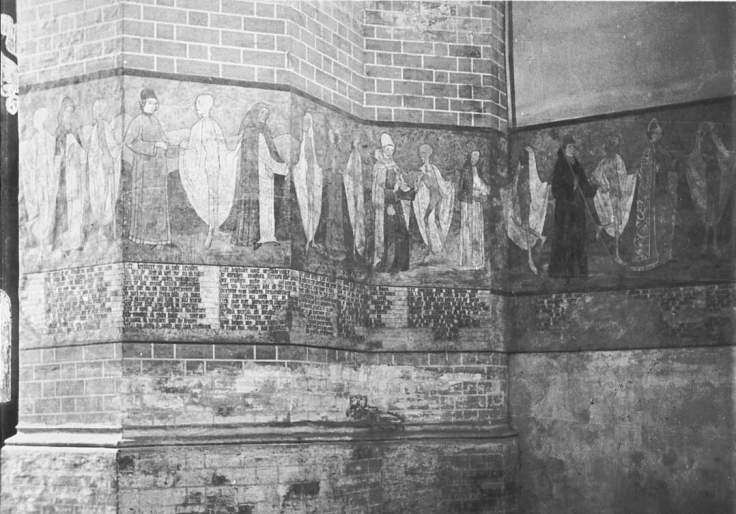
 

berlin-1936

~~~~~~~~~~~~~~~~~~~~~~~~~~~~~~~~~~~~~~~~~

Dorkas removes the keys from her pocket. “Which is worse, do you think. Keys keeping things out, or keys letting things in?”

“They each – ” begins Breeze.

“You may as well have the flashlight.” Dorkas interrupts her. “Until we get the damn door open.”

Breeze has to hurry to stay in step, and almost drops the flashlight in her haste. When they reach the door, Dorkas quickly inserts the key. It works with ease.

“Fortune smiles on my enterprise,” mutters Dorkas.

“I don’t understand.” The young woman is perplexed as she looks around. “I’m certain when I was here, the painting was on these walls.” She watches Dorkas put the other key into a second door. “We didn’t go anywhere else.”

“What did Agnes tell you?” Dorkas opens the door, and glares down a darkened flight of steps.

“I’m not supposed to say.”

“Mother Ursula certainly expects me to go down into the gloom.” Dorkas is harsh. “Otherwise, why am I here?”

“I don’t deny that’s the way it is now.” Breeze stands beside her, peering into the dark. “I just wonder if it is what we would find tomorrow.”

“I may as well take their kind illumination.”

“Agnes only had a candle.” Breeze gives her the flashlight.

“Agnes could not fear half the terror I feel.” Dorkas shines the light down the stairs. “She expected to come back.”

“I’ll be waiting.”

“If I’m not forever, then I won’t be long.”

As Dorkas descends, the stone walls absorb the light, pockmarking the surface with rough shadows. She pauses before entering the room, perturbed by the dimness. Her light had shone brightly minutes ago, but now its beam seems submerged in water.

“Damn.”

She slaps the flashlight against her open palm.

“I’d do better with – ”

She stumbles on the bottom step, twisting her right foot as she is thrown against the wall.

“Damn.”

The flashlight falls and rolls across the floor. She hears its metal casing scratch over the stones, and watches the beam of light spiral like a demented beacon, until it turns around to shine back into her face.

“I won’t stay if that goes out.”

Dorkas deliberately speaks aloud.

“Whether I’m in Berlin for a night or a year.”

She tests her foot and finds her ankle is slightly injured.   “If I break my leg, what will they do? Leave me down here?”     She bends over to get the flashlight.

“A permanent fixture.”

As she takes the light, she points it away from herself.

“Christ.”

The feet are bare, and dirty, and raising dust as they dance. A cloud of dust rises up their emaciated legs to their knees. Although Dorkas is in a crouched position, she jerks away from the figures, and sprawls on her back.

She starts to cough in the dust, and the ragged, whirling band begins to encircle her. The light gripped in her hand strays across their bodies, and catches the glint of bleached, protruding teeth as they grin down at her.

“A tomb.” Dorkas shouts.

She can not count the number of hands reaching toward her, their flesh mottled from the iridescence of putrefaction. The frayed cuffs of their funeral finery trail strands of unravelling cloth, and she cringes from the touch.

“You want me with you?” Dorkas struggles to her knees. “To end on your wall?”

Bejewelled rings and bracelets rattle against bony fingers and wrists. The sound fills her ears as the hands, extending to grab her, are jostled by the tempo of the dance. They can not stop their own feet, and they can not stop their partners who hurry them ever on.

“I won’t.” Dorkas holds the light in both hands. “Alive or dead.”

Der Totentanz becomes smaller as the figures tighten the circle around Dorkas. A whiff of their decay permeates the dust, and she turns her head, coughing even more. But she can’t avoid their movement, their grasping hands, their stench. Victory is etched upon their faces.

“Dorkas.”

She barely hears her name as she huddles more closely to the floor. She is afraid to stand in case the frenzied dancers graze against her. She fears that the slightest brush – whether from their knees, their fingers, or even their rotting clothes – will lift her to her feet and make her a part of this final procession.

“Dorkas! I can’t turn on the electric lights.”

“You wouldn’t want to see.” Dorkas tries to shout, but her throat is clamped by hysteria. “This is worse than buried alive. I’d rather be in the dark.”

The dust of the dead is filling her mouth as she switches off the flashlight.

“Dorkas! For God’s sake.”

Breeze comes plunging down the stairs, scraping her hands as she steadies herself against the wall.

“Answer me!”

When she reaches the bottom, she stops in the blackness. Her hesitation is brief, and she starts forward at her usual pace, hands outstretched. She strains to hear the slightest sound.

“Dorkas? Did you drop the flashlight?”

“Are you alive?”

“Dorkas?” Breeze turns abruptly, for the voice is behind her. “Of course I’m alive.”

“Then I guess we both are.”

Dorkas gets to her knees, and slowly stands.

“Berlin proves to be as wonderful as I anticipated.” She brushes dust off her shirt. “Let’s get out of here.”

“Did you lose the flashlight?” Breeze starts to move toward the other woman’s voice.

Dorkas is momentarily puzzled, then realizes it is still gripped fiercely in her hand. She switches it on, casting a beam over Breeze’s legs.

“You’re it.”

“I thought you were it.” Breeze looks down at her legs, then follows the light back to Dorkas. “When you didn’t answer, I thought something had gone wrong.”

“I’m in Berlin.” Dorkas laughs harshly. “Everything goes wrong.”

She approaches the younger woman slowly.

“I don’t know where I would be if you hadn’t come to me.” Dorkas strokes Breeze’s arm. “Your intervention won’t make the others happy.”

“I’ll handle himself if you take care of the old girl.”

“Deal.”

“Let’s take a look.” Breeze reaches for the flashlight.

“A look?”

“At the bloody painting.” Breeze is turning the light toward the wall. “I know it’s been a long time since I’ve seen it, but maybe we can figure how its now in a different place.”

“No.” Dorkas swats the flashlight with her hand. “If you accept that there is God and Satan, then you accept there are things beyond your power.”

She stands close to Breeze, the light between them.

“You do not invite what can destroy you – that is dangerous folly.”

“But you came here.”

“Yes.” Dorkas takes back the flashlight. “I came here. And that courage – and you – enables me to walk out of here.”

She looks Breeze in the eyes.

“I have light, and I have a friend, and I’m not going to be buried alive. Not tonight, at any rate.”

She shakes the flashlight.

“Not here, at any rate.”

Dorkas sighs deeply.

“But I’ve done my part.”

“These are distinctions I don’t understand.” Breeze begins to feel uncomfortable. “Here we are – standing right here. Haven’t you won?”

“If you tempt fate?” Dorkas speaks softly. “No – fate will always win. Fate has all the cards.”

“That sounds fatalistic.”

“Life is fatal.”

“Perhaps I’ll come back tomorrow and be a tourist.” Breeze wants to hear her own voice. “Will a bunch of loud Italians and pushy Americans keep the dancers in the painting?”

“It might make it easier for them to mingle.”

“I’m not going to see them step from the wall,” insists Breeze.

“I suggest you look closely at the mustiest Italian, or the most hysterical American.” Dorkas shines the light toward the exit. “And then keep your distance.”

Dorkas is impatient as she watches the young woman walk through the beam of light, and quickly begins to follow.

“Did you say something?”

“No.” Dorkas answers curtly, but she has heard it too.

It is a sound which stays in her ears, until the door is firmly closed and locked behind them.

The sounds of an interrupted dance, where she knows partners are still being sought.

DE


(image)http://www.dodedans.com/Full/berlin-1936.jpg
My Letter To Kafka – Life Lessons With Postage Due

016898305_30300

My Present / Your Future

Still in this World

A Life Away

Dear F:

Although it will give you no pleasure – well, ‘little’ pleasure – you are correct in all your observations.

Governments become the tools of the bureaucracies which run them. It doesn’t matter what type of Government, from the monarchy under which you lived, to the right wing horror of fascists who called themselves socialists, to the inept socialism pretending to be ‘for the people’. All three governments held their sway over the city where you spent your life.  All three oppressed the people they ruled. All three looked after themselves first.

Writers are either writers or they aren’t. The urge to write encircles one like a snake around its prey. Feed it and it won’t quite squeeze you to death. You can not ignore it – even at your peril. It is with you every hour of every day, ever inquisitive and (sadly) always looking for something better.

Love is a see-saw of extremes. Every high guarantees a low. Every low reaches for a high. Every high reaches for a high. When these hills and valleys are eventually levelled, they are still desired.

Sex is highly over-rated. The thing of it is, even rated fairly ’tis a consummation devoutly to be had.  Yes – I know – you appreciate Shakespeare. On a par with Goethe, even if you can’t bring yourself to say the words.

People are just one damned thing after another. Of course, so many people have brought you blessings that you throw up you hands to ward off the snake. Sometimes loosening its grip.

There is no castle with walls thick enough to hide against the perils of being human.  Which is why you never tried. Except the grave, of course. Except the grave.

Yours,

 D

Kafka Pages Survive Fire, History, And The Law

page-of-kafkas-writing-1(From Der Process by Franz Kafka)

Much keeps being made about Franz Kafka telling his best friend, Max Brod, to burn all of his (Kafka’s) manuscripts, and that Max did not do it. What keeps being overlooked is that Kafka made this request three or more times, and each time Max told him outright that he would not do it.

Kafka asked a person whom he knew would not burn his manuscripts to burn his manuscripts. That is a perfect encapsulation of Kafka. He could justify to himself that he tried. He made the effort.

Had he wanted them all burned, he would have done it himself.

So, now, some remaining manuscripts of Kafka have ended their own trial, and will be made available.

Brod estimated that Kafka actually did burn about 80% of all his own manuscripts. In my novel, Kafka In The Castle, I have described such an incident, based on secondary sources. It follows the current News article about Kafka’s manuscripts.

DE

~~~~~~~~~~~~~~~~~~~~~~~~~~~~~~~~~~~~~~~~~~~~~~~

Franz Kafka literary legal battle ends as Israel’s high court rules in favor of library

  • Country’s supreme court rules manuscripts are the national library’s property
  • Estate’s heirs must hand over documents, which include unpublished writings
Franz Kafka had instructed Brod to burn the manuscripts after his death but his friend did not honor that request and took them with him when he fled the Nazi invasion of Czechoslovakia in 1939 and emigrated to Palestine.
Kafka had instructed his friend Max Brod to burn the manuscripts after his death but Brod took them with him when he fled the Nazi invasion of Czechoslovakia in 1939. Photograph: CSU Archives/Everett Collect/Rex

The nation’s top court on Sunday rejected an appeal by the heirs of Max Brod, a friend of Kafka and the executor of his estate to whom he had willed his manuscripts after his death in 1924.

Kafka had instructed Brod to burn the manuscripts after his death but his friend did not honor that request and took them with him when he fled the Nazi invasion of Czechoslovakia in 1939 and emigrated to Palestine.

On his death in 1968, Brod bequeathed the papers to his secretary Esther Hoffe, with instructions to give them to the “Hebrew University of Jerusalem, the municipal library in Tel Aviv or another organization in Israel or abroad”.

But Hoffe, who died in 2007, instead kept them and shared them between her two daughters – sparking multiple legal battles.

In the trial against Hoffe’s heirs, which began in 2009, the state of Israel demanded they hand over all the documents, which included unpublished writings, arguing it was Brod’s last will.

Hoffe’s daughters refused, however, saying the papers – estimated to be worth millions of dollars – had been given to their mother by Brod and therefore she could dispose of them any way she wanted.

In its ruling, the supreme court said: “Max Brod did not want his property to be sold at the best price, but for them to find an appropriate place in a literary and cultural institution.”

Hoffe had during her lifetime sold the original manuscript of The Trial –considered by some to be one of Kafka’s best works – for $2m.

The Hoffe family kept the bulk of the collection locked away in bank safety deposit boxes in Israel and Switzerland and over the years sold some papers to collectors.

https://www.theguardian.com/books/2016/aug/08/franz-kafka-papers-israel-court-ruling

++++++++++++++++++++++++++++++++++++++

Excerpt from: Kafka In The Castle


18 April 1917

Max occasionally tells me that my writing makes a mockery of real life. But I find that the life which surrounds me  – which I wade through every day – makes a mockery of anything I can write. What place do my awkward dreams and petulant hopes have in this real world. “Do they keep me warm?” as my father asks. Father would have been happy – if far from understanding – had he been watching me this past hour. I wedded both worlds through flame. Passion enough for me, and heat enough for him.

On this abrupt cold day, in this chilled, unwelcoming house. I opened the empty, blackened stove, and prepared to make a fire. I read too many newspapers, so their pages were abundant. All this vague war news, getting more vague, and pointing only to disaster. A match struck against the side of the stove, and the war news erupted. A fitting end. Then, since I’m not allowed into their war so my flesh can perish, my other life could at least enter the inferno.

I took a pile of manuscripts from the chair and placed them into the flame. Page by page. Words and sentences marching. I didn’t even look to see what they were. Which characters vanished. Which actions ceased. All equal to me, and all equal to the flames. Some of the pages were older work, which I carry from house to house with the intent of making better. This time I succeeded. Other pages were created in this tiny house, where there are too many eyes at the windows, and too many years caught in the dust. They followed into the fire, sometimes by the handful.

And now, I ponder over these pages beneath my fingers. However, there is new wood within the stove, and for the moment, the heat sustains me.


19 April 1917

Max was horrified when I told him about last night. “You burned your stories? Are you crazy?”  “I wrote them, so I must be.”  He smiled at that. Max’s anger can be easily deflected, for it is never deep. Max is a very good man, and cares for me more than I do myself. “And the novel? The Amerika novel?” I told him that many chapters of that must have been burned. Probably right from the start – they were no doubt the first things I grabbed from the chair.  “Anything else?”  “There were a couple of plays. I remember pages of dialogue.”

Max’s voice became hollow. He might no longer be angry, but neither was he happy. “I didn’t know you had written any plays. You have secrets even from me.”  “I keep secrets from myself. Don’t be offended.”  “What else?”  I could picture him writing down an inventory. “Some diary entries – those were deliberate.”  “And was that the end of your pyromaniacal obsession?”  “Of my own work – yes.” He looked at me questioningly – he didn’t need another secret. “There were a couple of bundles of letters from Felice. Neatly tied with string. They burned slowly. I have not had such warmth from her for a long time.”

Blog at WordPress.com.

Up ↑