I came across a transcript of this at the end of last year. It’s not that I forgot it, but it took me some time to remember it.
1. What unique challenges do you face when writing about serious
non-fiction issues such as religion?
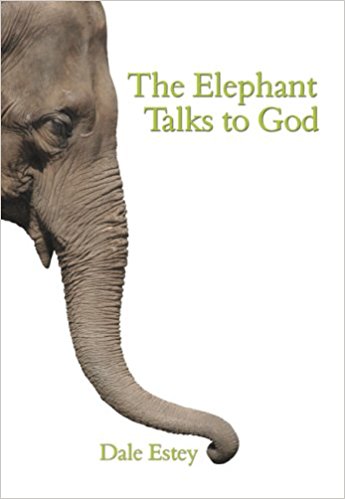
I WRITE about spiritual matters and leave religion to others. The spirit and its quests drive religion – religion just interprets. The biggest challenge I faced in THE ELEPHANT TALKS TO GOD is that the Elephant started asking questions I could not answer. Thus endeth the book.
2. You wrote The Elephant Talks to God in 1989. Why did you decide to
re-release it with the added stories rather than write a sequel?
THIS WAS the decision of the publisher, Goose Lane. When they approached me for a re-issue they were unaware of the additional stories. It was decided the marketplace would prefer one longer book over two shorter ones. Having just one book also reduced production costs, which in turn reduced consumer cost.
3. Why did you decide to become a writer?
“I WAS born like this, I had no choice, I was born with the gift of a golden voice.” This quote from Leonard Cohen sums it up. Not “born” this way exactly, but within one month in grade eleven I went from ‘no writing’ to ‘continually writing’. I have no explanation. I had no previous interest nor inclination toward the arts, or writing. I was not a reader, and only after university deliberately read such children’s classics as Black Beauty and Alice in Wonderland.
4. What books or authors have most influenced your life?
POSSIBLY P.G. WODEHOUSE was the most influential author in my formative period. I even sent him a fan letter and received a response. In university I experienced Franz Kafka, and I believe I have read everything of his in print. Much later I visited Prague to research a novel I have since written about him. There are reports of ‘missing’ stories and diaries of Kafka still in Berlin, which I would dearly love to find.
5. What, in your opinion, are the most important elements of good
writing?
SURPRIZE, HUMOUR and reality. ‘In context’ (it doesn’t matter what the genre) I want to be surprized by what is happening, yet fully believe in the reality created in the book. And somewhere, at least once, every character in every novel should make me laugh at least once.
6. What are you reading right now?
“WICKED” BY Gregory Maguire. His abilities as a writer astound me. I am a slow reader, and seemingly getting slower. Soon (?) to be read will be Alice Munro’s “The View from Castle Rock ” and John LeCarre’s “The Mission Song”, both requested Christmas presents. I also do a lot of research for my novels, and will embark upon histories of China in the near future.
7. What advice would you give to writers starting out?
I HAVE two steadfast rules, one put into rhyme. “When in doubt/take it out.” Regardless of the wonder of the poetic line, or the awe of the slice of dialogue, if you have any questions about its effectiveness, that is reason enough to remove it.
The other concerns the physical writing itself. At the end of your writing day, and you know what the next line of dialogue is, or the description you are going to write, or the next line of the poem – DON”T write them down. Start with them the next day, and you will quickly get back into the writing. I find this works 90% of the time.
8. Describe your writing process.
I’M A morning writer, roughly from 9:00 until 15:00. There’s a meal in there, and research and email and such, but I will generally complete two pages a day. I generally write seven or eight days straight and then take one off. At the start of a novel I have a well developed outline and characters, though I rarely write such things down. I find that at the end of a novel I spend an additional third of the writing time editing what is done. I usually complete a novel in two years.
9. Do you ever suffer from writer’s block? If so, how do you overcome
it?
THREE MONTHS of writer’s block during my second novel has (so far) been my experience with this curse (knock knock knock on wood). I sat at the desk literally for hours per day attempting to continue. I think I wrote five paragraphs in that time. I know of no way to overcome it other than attempting to write each day. My number two tip in question #7 will help in avoiding writer’s block.
10. Naturally, most writer want as many people as possible to read
their work. Who did you have in mind when you were writing this book,
the “believers” or the “non-believers”?
BRITISH PUBLISHER Joseph Dent introduced “Everyman’s Library” in the early 1900’s (which is now published by Penguin Random House UK). As my mother was from England and my father was a proud UEL, there were many of these books when I was growing up. Everyman’s Library had a motto at the beginning of each book: “Everyman, I will go with thee/and be thy guide,/ in thy most need/ to go by thy side.” This is what came to mind when thinking of who I write for. I did not write for either believers or non-believers. I wrote for everyone, and my job is to make them accept that the The Elephant believes.



 kafkaestblog