Search

kafkaestblog

It is a whirlwind in here

Category

death

Trump And Death Walk Into A Bar

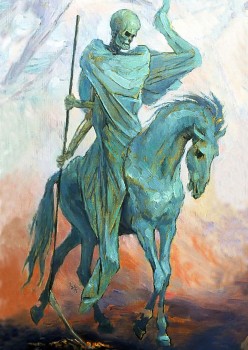
death-on-pale-horse-viktor-vasnetsov-248x350-1
~ Donald, you’re making my work easier.
 
~ It’s good for the economy.
 
~ Oh, I do love money. It’s great fuel for my business.
 
~ What’s good for business is good for the country. Believe me!
 
~ Oh, Donald – I believe everything you say.
 
~ You do?
 
~ Yes.  Death be not proud.
 
~ Aren’t you supposed to be on a horse?
 
~ Pestilence rode on ahead, and the other two went with him.
 
~ Scary guys. Very spooky.
 
~ Pestilence is preparing the way.
 
~ Ah, it isn’t that bad.
 
~ You know better, Donald.
 
~ Yeh. But I am a bit worried.
 
~ Why?
 
~ What if you guys kill off too many of the dupes who voted for me?
 
~ You’re afraid to lose the election?
 
~ Nah – that part is a bore. A snoozer.
 
~ Then what?
 
~ Buddy can’t buy my shit if he’s dead.

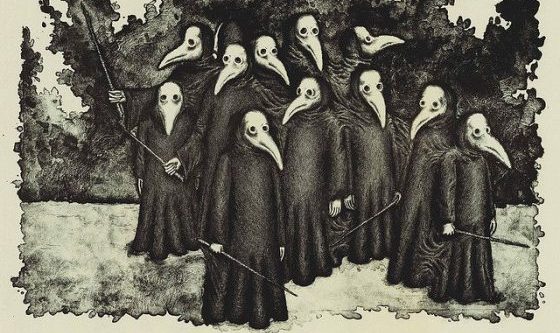
Black Death and End Times

plague-e1508254891177

Their world was ending.

They knew that from the toll of the church bells. They knew that from the stink of death. They knew that from the carts of seeping corpses being pushed through the streets. It was The Terrible Pox.

The Black Death.

Heat made the stink worse. The screams themselves became more terrible in the summer heat. Screams caused by the boils, and the black blood flowing through veins. The fetid vapours rose, and the drivers of the Death Carts puked from the stench.

There was nowhere to go, and no one to help. The monarch, the nobles, the bishops, and the wealthy, all fled to the country. They locked themselves into grand castles, yet they still died. The doctors, who knew no remedy, also died from their futile efforts.

Neither the poor nor the rich, the young nor the old, women nor men, were spared. They screamed and clawed to their death, and rats fed from their bloated bodies.

Towns and villages became armed camps. Strangers were turned back at the outer limits. Those suspected of the Plague were locked in their homes, sometimes to be burned. People were clubbed, a few were shot, many were buried before they were dead. There was no sorrow, and no mercy shown to any who were a threat.

The living were frantic to prove they still had life.

They ate and drank and danced and fucked as often as their bodies would allow. They were afraid to sleep, so terrified of that fake death with the real all around. They beat on drums, rang the bells frantically, shouted and sang and swore and cried. They rode horses wildly through the streets, until the beasts fell from exhaustion. They pillaged the vacant homes of the rich, looted stores and wine shops, and paraded in the jewels and fine clothes they had stolen. Women and girls and boys were raped and sodomised by strangers and kinfolk alike.

They did anything for action, anything to prove they were different from the rotting corpses in the carts, which trundled through the streets toward mass graves. They played all the more, and when some fell slavering in their midst, they were kicked into the gutters and forgotten.

It was a time for witches and charlatans. People would believe anything, take any quackish product, if it promised to save their lives. Ghosts walked the land while crops rotted from neglect. It was the end of the world for those who knew no better.

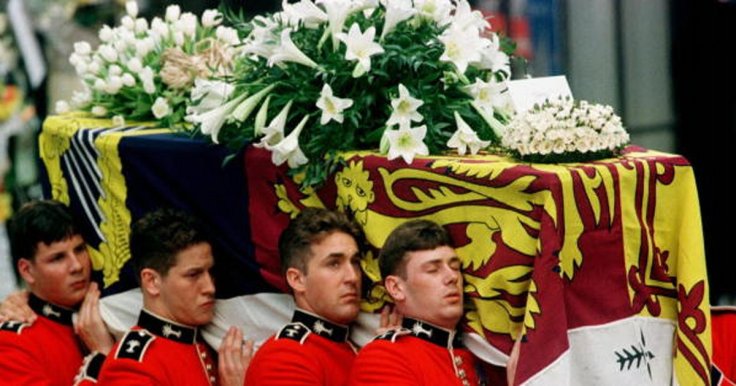
The Funeral For Princess Diana Comes To An End

http3a2f2fi.huffpost.com2fgen2f52935222fimages2fn-princess-diana-funeral-628x314-1

An excerpt from my novel More Famous Than The Queen. My main character – so famous he is just known by initials – is at the funeral of Princess Diana.

The casket reaches the Sacrarium. ST leaves his thoughts behind to follow the service, listen to the words, and sing along with the hymns.

Although he has no fondness for opera and operatic song, ST finds the soprano’s voice pleasant, and drifts along with the Latin text: “Dies illa, dias irae … Day of wrath, day of calamity and woe.” He finds Elton John’s presentation bizarre yet sincere.

The rest of the service proceeds around him, but he only stands and sits by following the motion and noise of those fore and aft. Perhaps it is his deficient attention span, perhaps it is jet lag (he did not get any rest yesterday), but, much as he did as a child on Sunday, ST slips into a revere.

He wonders where Diana is.

If the whole context of this service is correct, and her Spirit Everlasting is afloat in some other world, does she have the slightest interest in these proceedings? Do you care what is on the plate after you have eaten the meal?

Is it – as he hopes – an all new wonderful adventure?

ST is returned to the present by the familiar words of The Lord’s Prayer. He is actually reciting  “Give us this day our daily bread” before he realizes what he is doing.

Stopped in place and time.

He could be a child again (perhaps he is) wondering what `trespasses’ are. He could be the aware young man, wondering why God would have a penchant to lead us into temptation. And he could be as he now is, wondering if this was the only way for a troubled young woman to be delivered from evil.

ST is fully attentive to the final hymn, and The Commendation of the Dead to the Lord.

He suspects it is an all-or-nothing package: that Diana and Jesus and God are present and appreciative to what is happening around him; or that he and everyone else are just singing and praying to the empty rafters. He fears his faith has skidded to the unstable foundation of hope.

The cortege prepares to leave the Abbey. Although the choir sings as the procession slowly moves to the west end of the church, it is really silence which hangs over this vast array of people. Again the casket with its ruptured body wend their way down the aisle, the flower arrangement an almost dull glow in this final, sombre setting.

“Weeping at the grave creates the song.”

Or so the song goes.

Then there is the final minute.

The minute of silence.

Observed by the Nation.

Observed by ST.

Observed -perhaps- as a minute’s pause in the enormous expanse of Eternity by a dead princess.

It Always Ends In Kafka

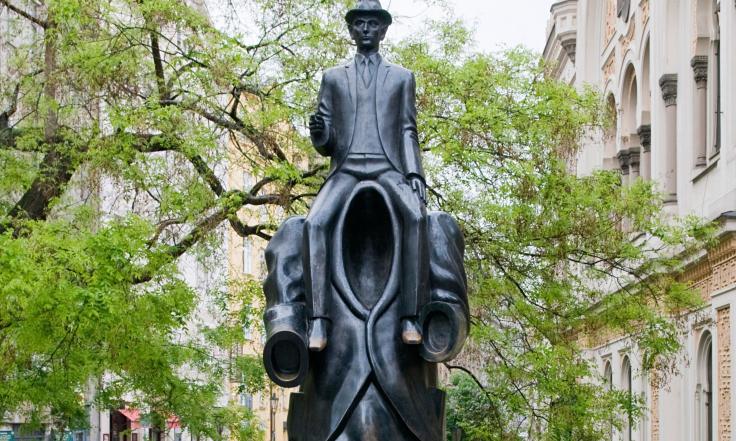
Statue of Franz Kafka

A short story:

The old Rabbi moved slightly on his bed, and the young man raced over.

     “Yes, Rebbe?”

     The old Rabbi opened his eyes, showing the cast of death which had almost consumed him. “Ka … ” he groaned.

    The young man had been told the dying Rabbi would never regain his senses, and he did not know what to do. He was scared, almost horrified, but he leaned closer.

     “What is it? What do you want?”

     The old Rabbi struggled for breath. “Ka … Kaf …”

     The young man gazed at the face, saw its pallid features and the clouded eyes. He touched a shrunken cheek, raised his voice to a shout. “What is it? What can I do?” He could hear wheezing, the struggle for air. He put his ear directly over the gaping mouth.

    “Ka … Ka …” One last ragged breath, a low hollow whisper. “Kafka died for your sins.”

Battle Of Britain Day And My Father’s War

battle
Battle of Britain Day is 15 September. On that day in 1940, the German Air Force accepted that they could not sustain an air invasion of Britain. They ceased their daytime attacks, and resorted to only attacking at night.
 
 
I just realized today that my father, a soldier in the Canadian Army (whose prime military involvement in the Second World War was the invasion of Sicily and Italy), actually had greater personal hardship from events dealing with the air invasion of Britain, than the acute danger he faced during his land invasion.
 
 
The first thing that comes to mind is that he hated the confinement of bomb shelters, and would not use them. He would wander the streets and watch the air action. He saw bombs explode, and planes (of both sides) get shot down. He recounted one experience of seeing a German pilot parachuting to the ground, after bailing from his plane. A very young soldier aimed his rifle at the descending airman and was ready to shoot. An officer knocked his rifle aside. The soldier started to cry, yelling “They bring me over here, and they train me, but they won’t let me kill a damn German.”
 
 
On one occasion, my father went on leave with a group of soldiers, including his three best buddies. They were always together. However, my father also spent time with my mother (she was a British girl, and became his War Bride). As a result, my father did not return on the same truck that his buddies did, but spent as much time on leave as he could with my mother. When he did return to his barracks, he was greeted by shock and disbelief. The truck he was supposed to return in had been struck by a direct hit from a German bomber. It had just been assumed that one of the mangled corpses was his.
 
 
And the third thing, which I believe he only mentioned once, concerned an incident that happened near one of his British postings. His company was often moved and placed elsewhere during the three years he was in Britain. They would stay in each place a few months, and make friends with the local people. Near one of these postings there was a Boy’s School, mainly of younger teenagers. The boys were interested (indeed, fascinated) by the Canadian soldiers, and spent time with them. One day the school was bombed, and the soldiers were first into the ruined building. My father was eventually to see things more horrible than this slaughter, but I feel it affected him the worst.

Kafka And His Hot Summer Night Of The Dead

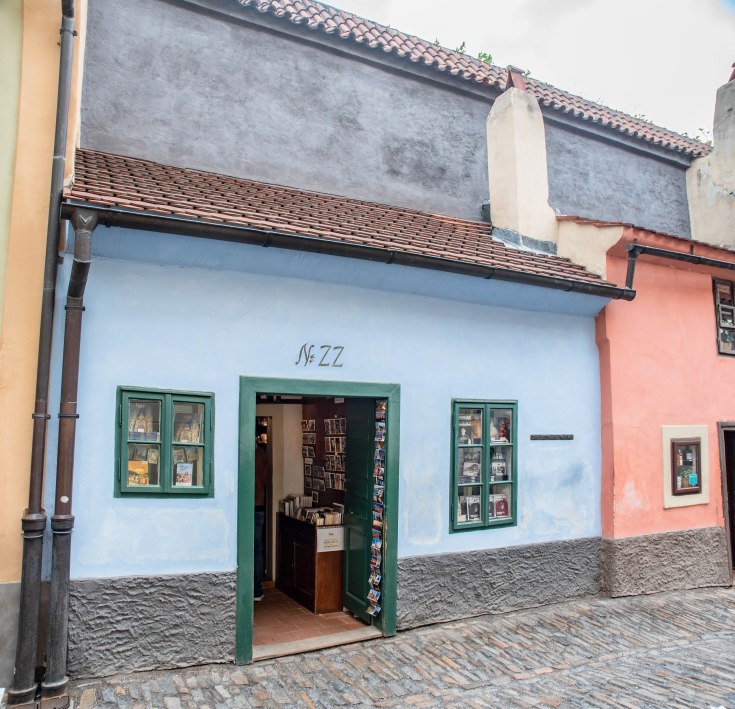
franz-kafka-house-golden-lane-prague

Kafka’s House: Number 22


In my novel, Kafka In The Castle, I fill in Franz Kafka’s missing diary entries. Every day chosen is a day where he either left no record, or destroyed the pages.

On this night, he meets the woman who was the girlfriend of Kafka’s neighbour on The Alchemist’s Lane, who had killed himself. Kafka found the body. He also found a note addressed to her, which he kindly burned.

*****************************************

25 July 1917

I had not been here long – the newspaper only partially read – when I thought I heard a noise at the door. A woman was framed in the open doorway, her hand still hesitant upon the wood. I rose from my chair, and she stepped back into the lane.

“Yes?” I asked.

“You knew him?” she asked in turn.

She was a slender woman, sallow complexion, and younger in age than Ottla. I walked toward the door, for it seemed apparent she was not about to enter.

“You were his neighbour – the Herr Doktor?”

She did not retreat any further, and I was now standing in the doorway.

“Oh,” I said. “You mean … ” But I had to stop, for I could not remember his name. I finally had to point to the house next door.

“Yes,” she said. “He killed himself.”

“Yes.” I had to agree.

“Did he …” she began, and I could sense her difficulty in having this discussion. “Did he say anything about me. I’m Julie.”

“We can go in, if you like. I do have a key.” I am an expert at stalling for time. “No one has moved in.”

She looked at me in disbelief, her face seeming to age as various expressions moved across it.

“No – that isn’t …” she began, staring at the other door. “I was never here. We didn’t have that type of friendship. But I have not been able to remove him from my mind. If he ever spoke of me, I care to know about it.”

My hope was that she would never ask about an envelope addressed to her.

“So you don’t wish to go in?”

“No. That means nothing to me.” She took a step closer. “Just if he talked.”

“You were his girlfriend?”

“He thought me so – though I told him differently, and offered no encouragement. But perhaps he drank too much to pay attention.”

“You were with another man?”

“He told you that? So – he did speak of me.”

“Yes.”

“What else did he say?”

There are times to tell the truth; times to expand the truth for clarification; and times to compress.

“He said that he saw you together with a man. And that he missed you.”

“Did he say anything the night he killed … the night he died?”

I didn’t pause, because I had stalled just so I could answer this question.

“He asked me if I was going to be in my house over the evening.” Here I did pause, as if in thought. “And he said he didn’t like the other people on the lane.”

“Nothing else?”

“Pleasantries – good evening, etc. He said he liked our talks.”

“He talked a lot?”

“No, not really.”

“Was there a note?”

“You should ask the police about that.” I was very calm. “They searched his house.”

“Yes, perhaps I will. He said nothing further?”

“We did not really have conversations.” I shrugged my shoulders. “He was always drunk.”

“Even that night?”

“Oh yes. The night he hanged himself – most certainly.”

“And you were the one who found…”

“Yes, Miss. And, I contacted the police.”

“He was … was dead when you found him?”

“Yes.” I looked directly into her eyes. “He did a very effective job.”

She was quiet for a moment, staring at his door. She looked along the Lane, then finally at me.

“You have been most kind, Herr Doktor. I’m sorry to have troubled you.” She did not wait for a response, and was turning away when I spoke.

“If I may ask, Miss. This happened three months ago.”

“To the night,” she said.

“Three months. Why have you waited until now?”

“It does not seem long.”  She was conscious of others on the Lane looking in our direction. “His attention – though I never asked for it – was so total and persistent, that I have felt it deserved my interest.”  She shook her head slightly. “But not any more. I wish to put an end to it.” She unexpectedly stepped toward me. “That’s all right, isn’t it, Herr Doktor?”

The question was so intense that I touched her shoulder.

“Yes. Without any doubt – yes. You’ve spent enough time on a ghost within a memory.”

I smiled, and she walked away, quickly down the Lane. Death’s hand released its grip.
 

War And The Army And Kafka

kafka115_v-contentxl

Kafka recorded the beginning of the First World War in his diary this way:

August 2, 1914: Germany has declared war on Russia. Went swimming in the afternoon.

That was it.

But, regardless of his lack of enthusiasm, Kafka believed in the duties of the citizen. He tried to join the army to fight. In fact, he tried to join a number of times. He was always refused because the government deemed his civil/government job was too important for him to relinquish.

But, near the end of the war, when Kafka was so sick he had lengthy periods of leave from his job to recuperate, the army came calling.  Kafka had to appear before authorities with medical proof of his illness.

In my novel, Kafka In The Castle, I ‘fill in’ one of his diary entries describing such a situation.

~~~~~~~~~~~~~~~~~~~~~~~~~~~~~~~~~~~~~~~~~~

07 February 1918

I find I must go to Prague at the end of next week. Such knowledge is proof that one should not open one’s mail. The Military yet again wishes to snare me, and I must once again prove that my hide is not worth the effort.

There were time (very rare) when my father would despair. Not his usual anger at the general incompetence and perfidy of the world around him, but a resignation to the belief that things would never get any better.

“If they want to drag me down,” he would say, “Then I may as well join them. I’ll go out into the street and let myself be swept away by the mob. I’ll become part of their common, grubby life, and let them wipe their boots on me.”

That is much as I feel right now. Let the army take me, dress me in their uniform, point me toward the Americans, and have some cowboy shoot me. Going into battle could be no worse than going into Prague.

[Image] https://www.ndr.de/kultur/buch/tipps/kafka115_v-contentxl.jpg

Proof of Life as Time Does What Time Does

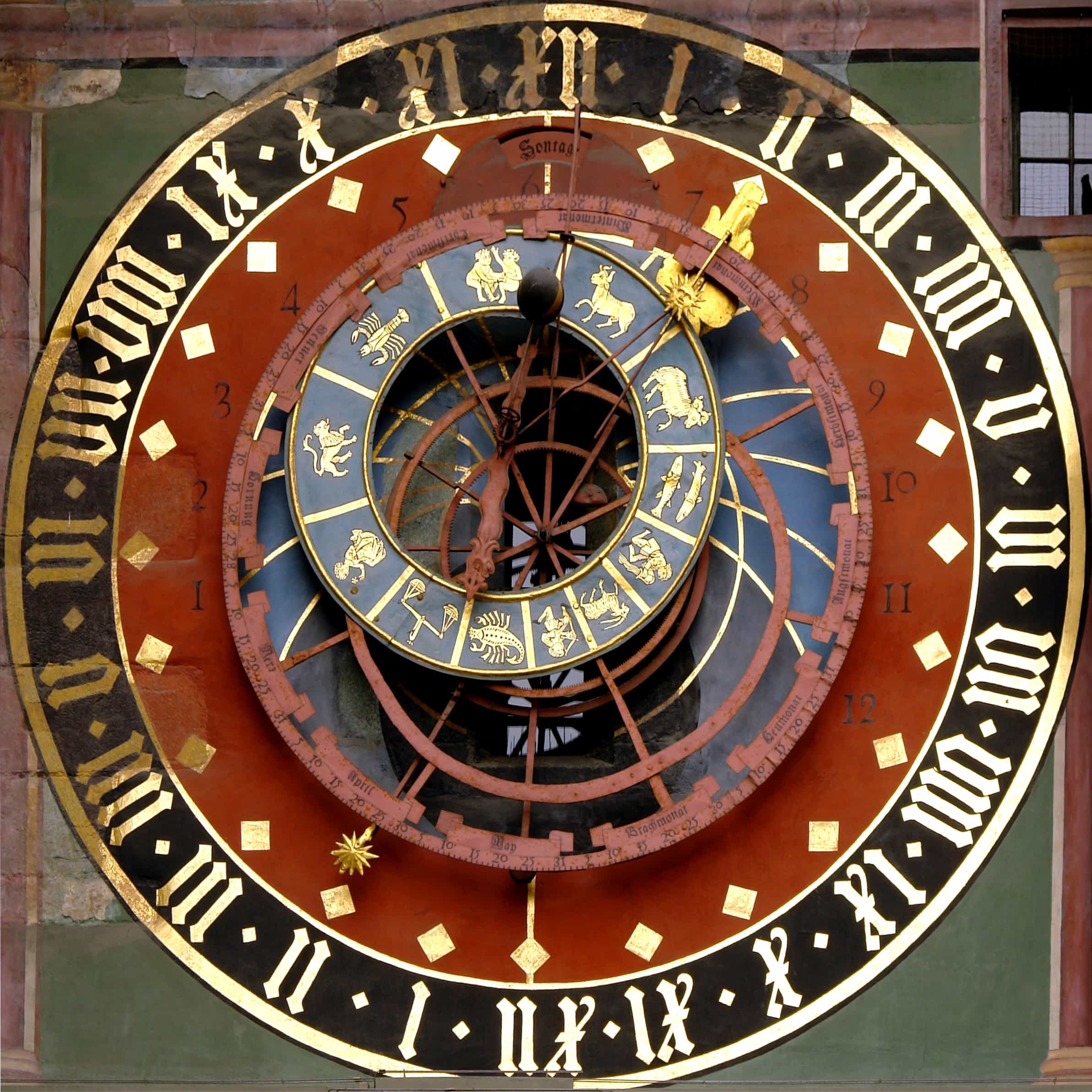
zytglogge-bern-astronomical-clock-2

What sights indeed are these, that cause the racing clocks to pant their minutes in counterpoint to a life still learning the difference between wretchedness and love?

The swing goes up and the swing goes down, and then goes up again. If you are on that race, with childish yells, and up-down-mess-it-around feelings in the pit of your stomach, they haven’t lowered that coffin lid yet.

No, not yet.

****

What sights indeed are these, that make a heart argue the worth of dying, and ring the bells across the hill when there is no hand upon the rope?

There are happy tunes on the breeze and, yes, even the unicorn lifts its head with twitching ears and mouth agape.

And even (so it has been recorded, in long-ago books) our Lord Jesus God would pause in His ministrations at the wonder of it all.

****

What sights indeed are these, that ease the night’s passage and sow the fields full of restful dawn?

A race against the end is run by all of us; when the kitten kicks and purrs through her ball of string, or when the ancient’s cane tap-taps across the room. Eyes, whether young; or dim; or blind; can still open in amazement, and still marvel at the ever-changing newness.

Marvel and rejoice.

****

What sights indeed are these, that turn all tunes into rhapsodies of joy, and make the moon do gypsy dances through the night sky?

A sky of stars that shower and shake and stream across the galaxies to cram unto the ends of the distant universe. Grains of sand upon the shore would take sensitive fingers, and a lifetime of counting, yet still could never fill this distant space where even numbers stand in awe.

Zeros with mouths agape.


(Image) https://wornandwound.com/library/uploads/2017/06/Zytglogge-Bern-Astronomical-Clock-2.jpg

“Kill Me, Or You Are A Murderer.”

prague20franz20kafka20-resizefranz-kafka-museum-prague

Franz Kafka was born in 1883, so he would probably be dead had he lived.

I wonder what Kafka would think about the worldwide communication and information of today. He was a rigid fixture of the staid (he hated using the telephone). He also was a keen observer of the world around him (he wrote the first newspaper report about aeroplanes, and he invented the safety helmet). It was more this deep divide in his personality which caused him his problems, about which he so famously wrote.

He did not fit into his personal world, yet he fit into the real world perfectly. He was adored by his friends and by many ladies. He was respected at his work and rose to a position of power. His stories were published to acclaim in his lifetime.

Kafka lived a Kafkaesque life. He died a Kafkaesque death (he caught tuberculosis because he drank “pure” unpasteurised cow’s milk). He was rigid in his personal beliefs (until proved wrong), yet he was a beacon of compassion to others.

Kafka was always on a tightrope. He looked at things with such accuracy that his comments can seem bizarre. Supposedly his last words were:  “Kill me, or you are a murderer.” They were to  his doctor, as Kafka beseeches for an overdose of morphine.

I have written much about Kafka. This is a diary entry I had him write in my novel Kafka In The Castle:

03 July 1917

The anniversary of my birth. In honour of the day, I do not make it my last.

Create a free website or blog at WordPress.com.

Up ↑